
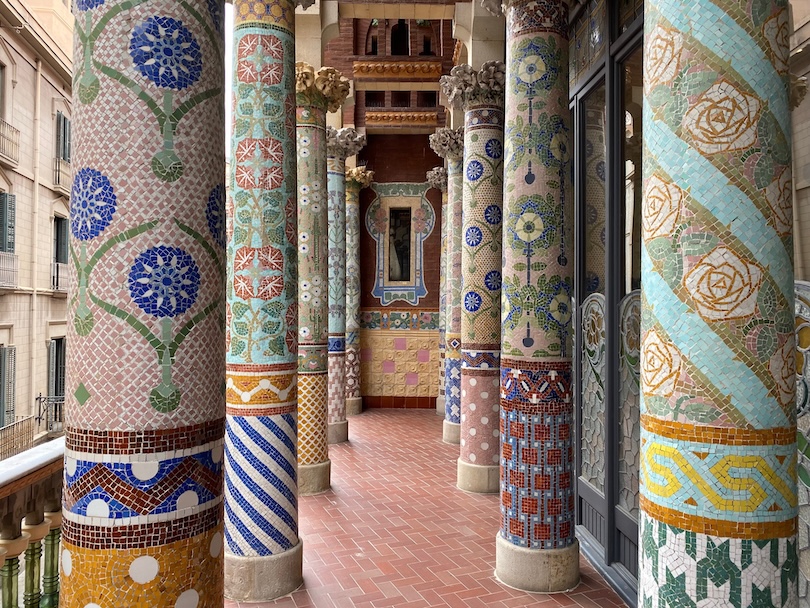
Modernism – or in Catalan Modernisme – is an art and literature movement that was primarily connected to Catalonia and Barcelona in the period from approximately 1880-1915.
In the context of the rapid development and urban changes during the industrial revolution the Catalan elite – politicians, bourgeoisie and rich entrepreneurial families – intensified their efforts to create an own national identity. At the same time Barcelona underwent a massive city extension – with its master plan called the Eixample developed by urban planner Ildefons Cerdà. The word Eixample literally means extension in Catalan language.
This is why especially architects at that time were very lucky. A lot of money was available, so was building space. The rich families wanted to escape from the old town – cramped within the city walls, overcrowded, dirty and smelly – and were the first ones to settle in the new area.
The master plan incorporated a grand boulevard, Passeig de Gràcia, to catch up with other European cities like Paris and its Champs Élysées. Here it was where the families competed in showing off their wealth and created their legacy for decades to come.
Luckily, nearly all of those buildings survived the bombing during the Spanish Civil war in the years of 1936-39 and Spain stayed neutral during World War II. This is why you will find an incredible amount of amazing architectural gems from that time.
Walking within the Golden Triangle, roughly the area between the streets of Gran Via, Diagonal and Aribau, feels like being in an open air museum!
What are the characteristics of Modernisme?
Modernisme is a similar movement like art nouveau in France or Jugendstil in Germany. Typical elements are:
- the use of curves instead of straight lines
- dynamic shapes are preferred over static forms
- rich decoration with floral and other natural motifs (naturalism)
- materials such as ceramics, mosaic tiles and glass
Along the boulevard of Passeig de Gràcia you will encounter magnificent buildings and objects with these features that were designed by the top architects of their time, such as Pere Falqués, Lluís Domènech i Montaner, Josep Puig i Cadafalch.
Gaudí went beyond Modernism and created his own style
Gaudí who became the most famous Catalan architect of that time is certainly a genius. Though you will always notice his inspiration by nature he went beyond typical architecture around 1900. Bold and daring are Casa Milà, Casa Batlló and especially La Sagrada Familia. His passion for Catalan medieval history was evident and he was extremely creative in incorporating the most famous legend in Catalan culture when designing Casa Batlló: Sant Jordi slaying the dragon.
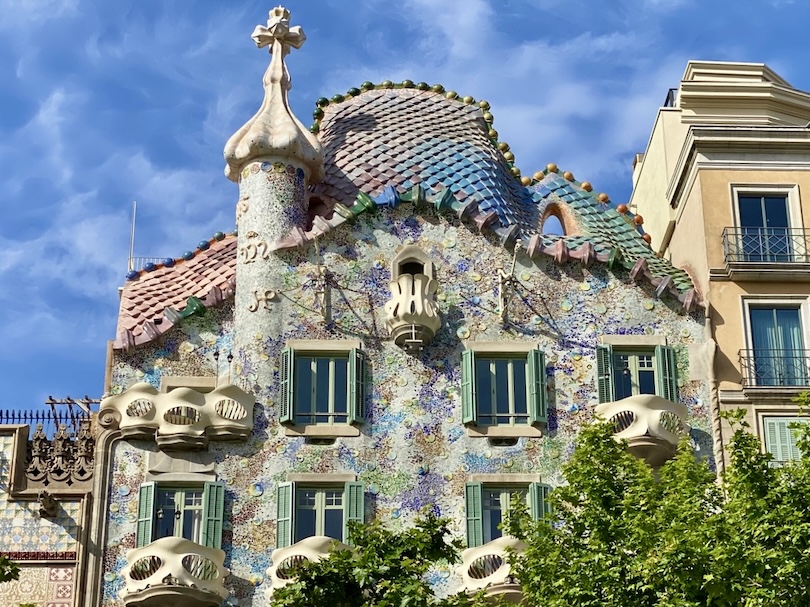
References in Modernism to the splendid past of the region
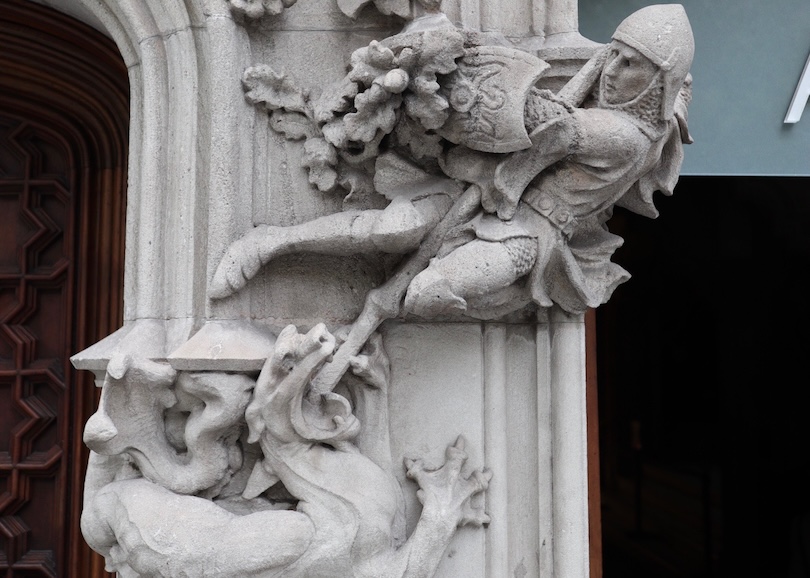
No wonder that as part of the struggle to build an own national identity romantic references to the splendid past of the region were made. Important legends and figures of Catalan history and culture were – explicitly or in a hidden way – incorporated in so many buildings. Gaudí made a subtle reference to Sant Jordi with Casa Batlló. On the other hand, you will find beautiful figurines of the knight slaying the dragon all over places and buildings in Barcelona such as on the façade of Casa Amatller.
The bat of the greatest King Jaume I is a recurring motif as well. The animal was decisive in reconquering territory from the Moors in the 13th century. Jaume I started the golden era of Barcelona and Catalonia and led the house of Aragon to become an important Mediterranean kingdom. At his height it spun from Spain across Southern France to the South of Italy. Check out the bats at the Arc de Triomf!
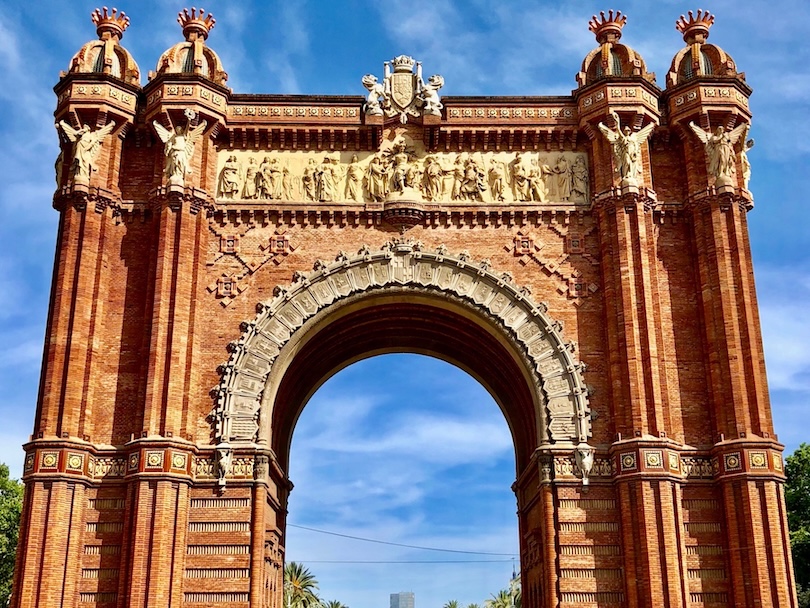
Modernism as start of the independence movement
One could say that the idea of a national Catalan identification was re-planted at the end of the 19th century. This certainly led to an increase in awareness of the importance of the region and the culture. One could even say that it was the start of the current independence movement that would prefer to split off from Spain and form an own Catalan Republic. And it is true that the movement especially points out the glorious past from 700 years ago to support reasons for the independence.
But has not the world changed a lot? Would not be the economic impact severe, maybe even disastrous for the region? This was something even the bourgeoisie in the late 19th century understood. While nurturing an own identity they had understood that the economic symbiosis of Catalonia and Spain was a win-win situation for all.
Things to do in Barcelona
Stroll along the beautiful boulevard of Passeig de Gràcia where the density of Modernist buildings is breathtaking. You can of course plan a visit to many of those buildings as they are museums today.
For us Modernist highlights off-the-beaten-track are:
- Casa Amatller
- Palau de la Música
- Palau Güell
- Hospital of Sant Pau
Discover more from Wild Paths Together
Subscribe to get the latest posts sent to your email.

2 Replies to “Catalan Modernism – a romantic art movement”