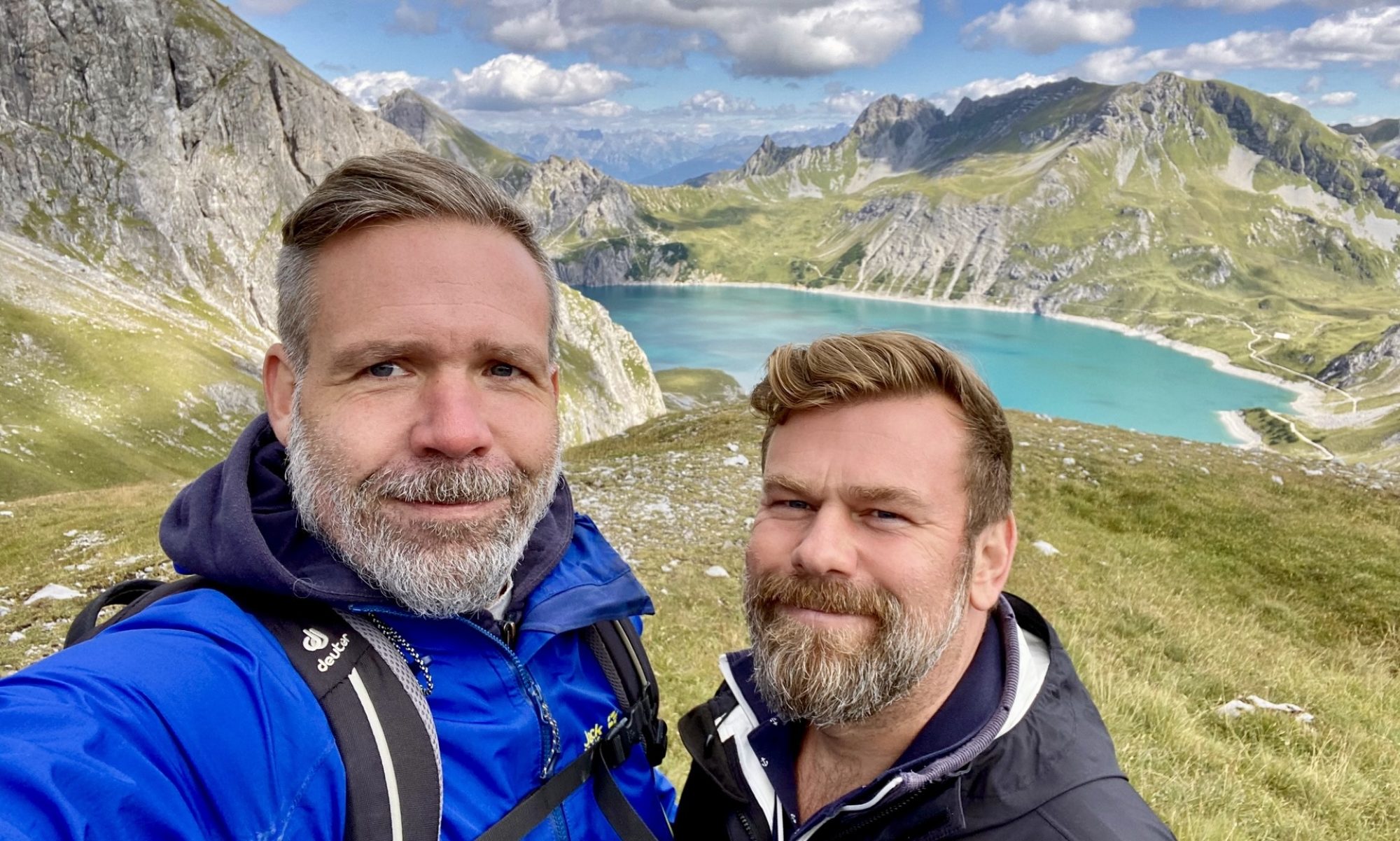
In November 2017 we had spent some time with Christian’s former colleague Victoria in Torrevieja close to Alicante. As our next stop was Valencia we decided to use Blabla Car. It is a car sharing app where you can book a seat in a car of a private person that is travelling to the same destination. Mireia (23 years old) and her dog drove us from Torrevieja (where she worked) to Valencia (where she lived with her girlfriend). It was fun getting to know local people and actually I could practice my Spanish for 2,5 hours as well. She dropped us near central station from where we started walking to find our AirBnB apartment. Long live the shared economy!
Valencia is the third biggest city (800,000) in Spain after Madrid (3,2m) and Barcelona (1,6m). It has a long and rich history as it was founded by the Romans in 138 BC as “Valentia Edetanorum”. The local language is “Valencian”, a Catalan dialect. It feels like Catalan that was much more influenced by the Spanish language.
Valencia has several striking landmarks. One of them is the river bed. In the 1980s – after the city had been flooded by the river El Turia – citizens voted for the construction of a new river bed that would go around the city. They converted the old riverbed into a magnificent park of about 8 km lengths: The Garden of Turia. Luckily they succeeded as the original plans were to build a city highway instead!
Walk through the Garden of Turia to the City of Sciences and Art

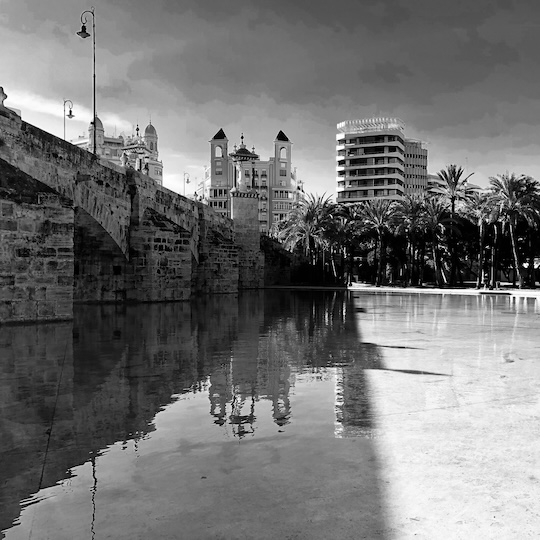
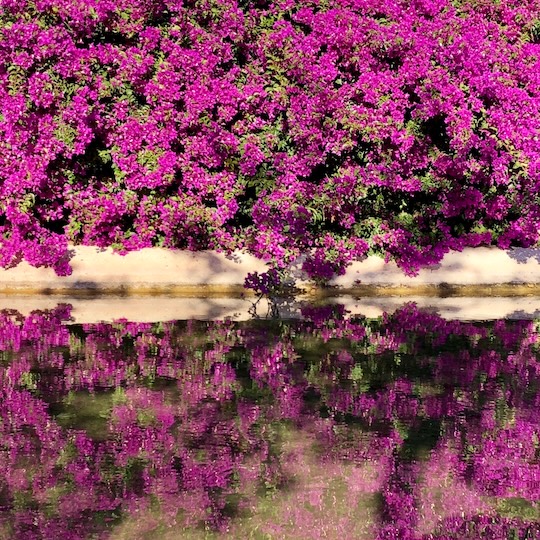
The park is an oasis of tranquility in the middle of the city. It has a beautiful lay out and has all amenities for recreation – from athletic grounds to terraces where you can have an “Agua de Valencia” – a local drink consisting of cava, orange juice (it is the home of the Valencian oranges!), Vodka, Gin and loads of sugar.

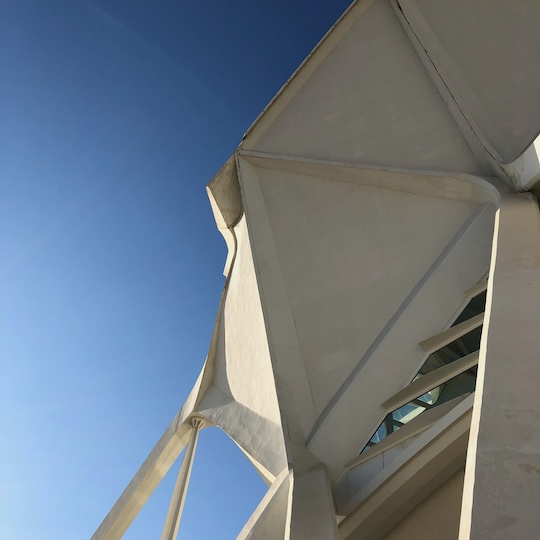
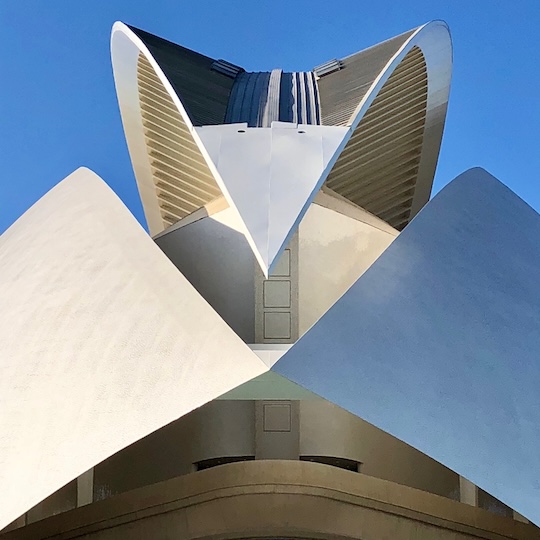
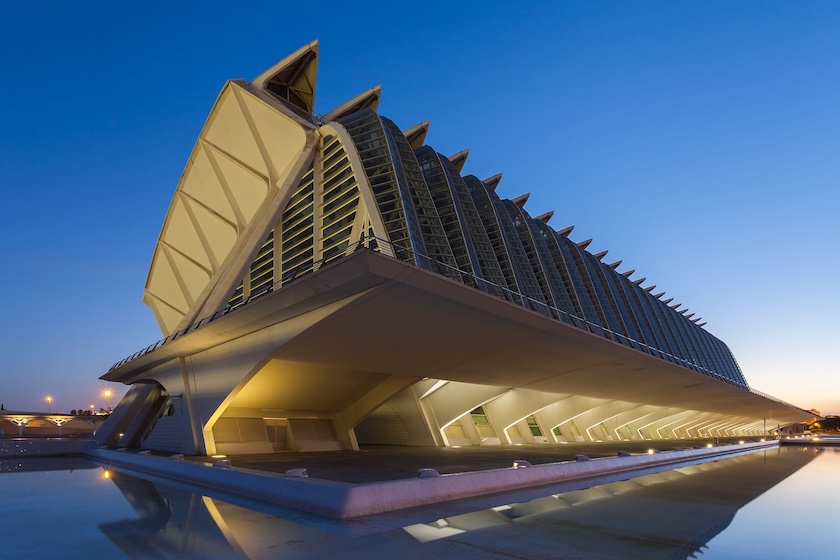
When you follow the river bed towards the sea you will arrive to a second landmark: the City of Sciences and Arts. It is an entertainment-based cultural and architectural complex designed by Santiago Calatrava and Félix Candela.
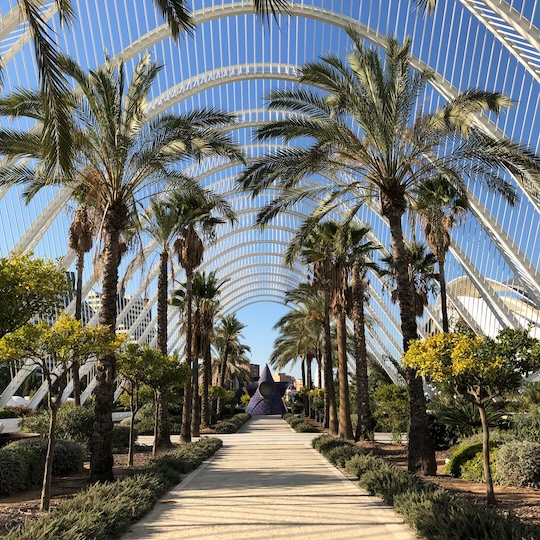
The following photos I took from the internet (source: Wikipedia) as it was difficult to photograph a global view of the buildings:
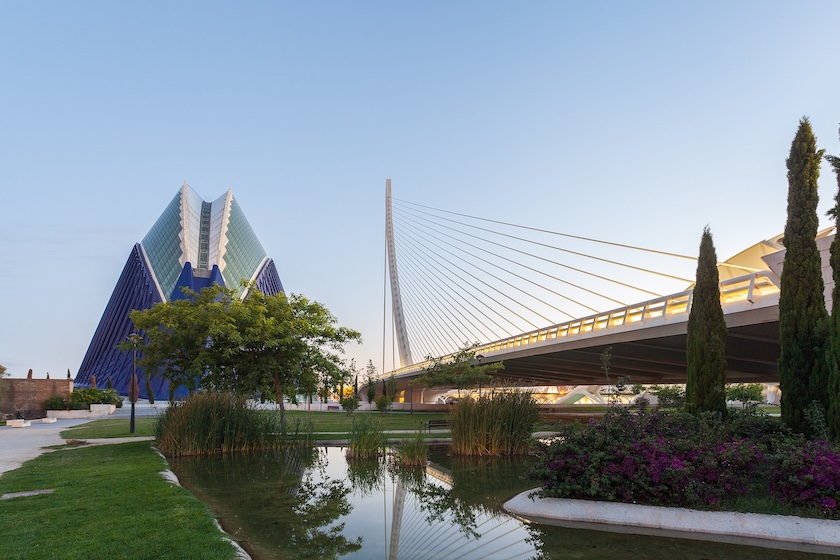
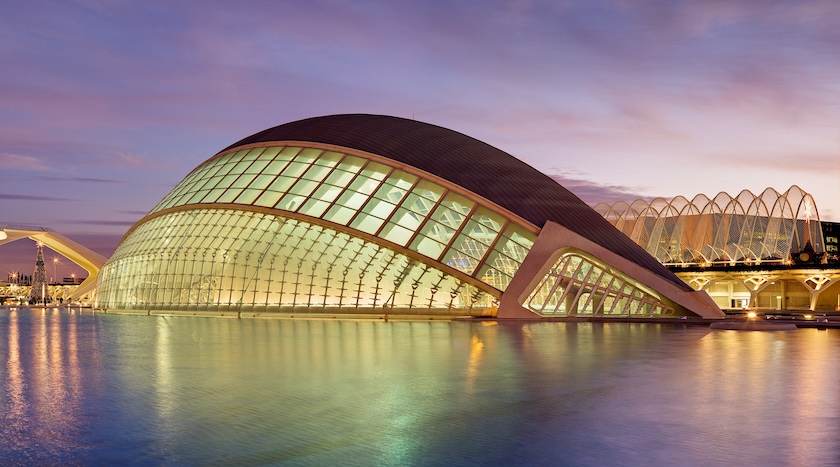
As it was Valencia Marathon weekend the city was very busy. About 280,000 runners participate in the short run of 10 km. This explained to us why the hotel prices were quite high that particular weekend. We heard German and Dutch everywhere.
Paella from Valencia
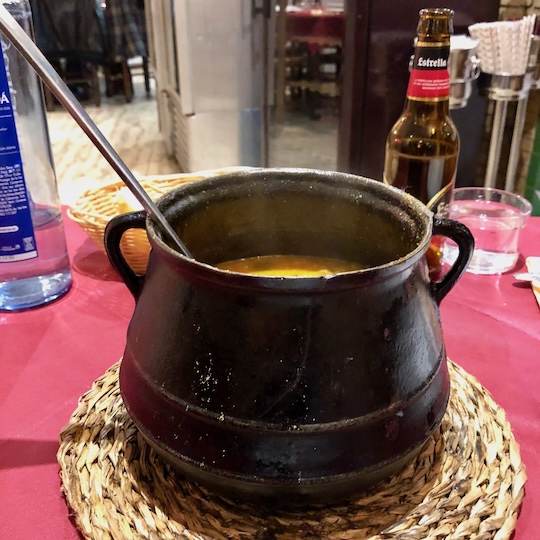
Valencia is also known for her Paella. The word actually means pan. We tried out two varieties: First, we ordered the wet style Paella with rice, duck and mushrooms. Second, we chose the dry Paella in the style of Valencian Paella containing rabbit and chicken.
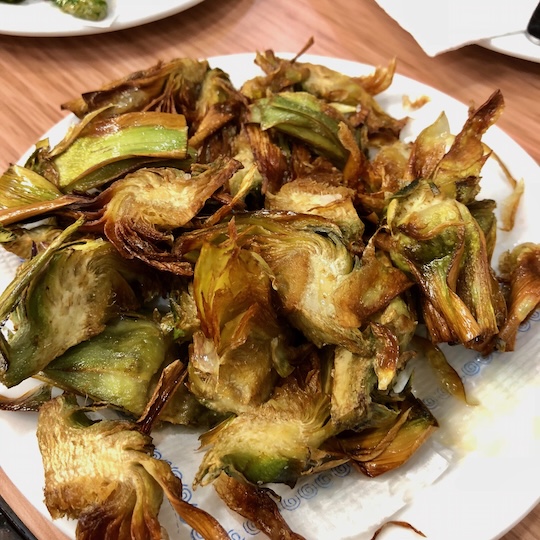
Personally, I am not a fan of it but if you are in the capital of Paella then you have to try of course the local cuisine! You should also try the fried artichokes with sea salt. A tapa that we started loving in Valencia.
Russafa District of Valencia
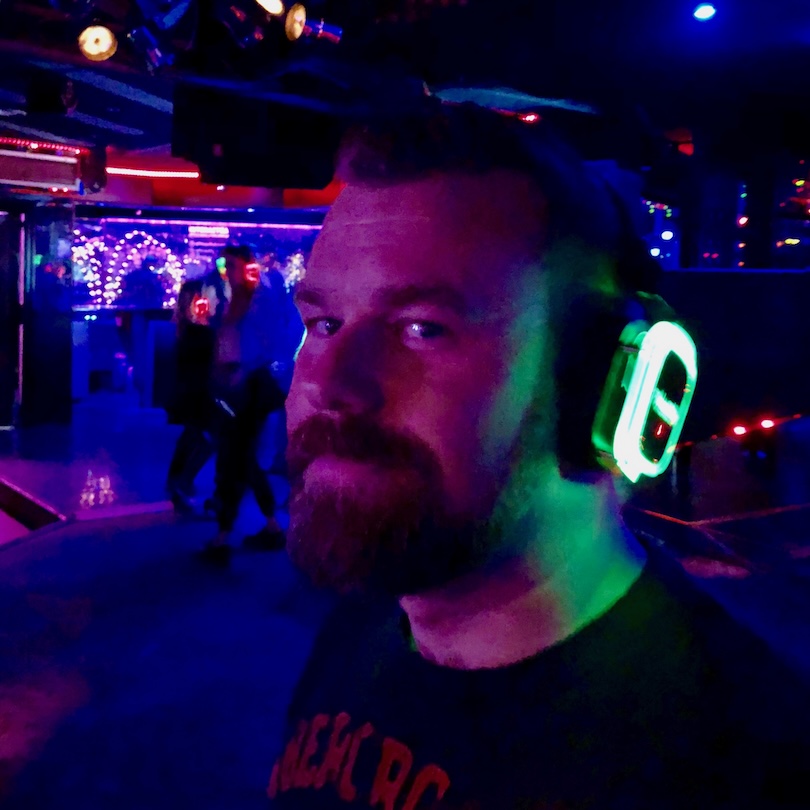
Friday evening we concluded with going out in the hip neighbourhood of Russafa. We ended up in a club where we had our first silent disco experience. Russafa is a hip area that reminded us of Barcelona´s Eixample with its grid. Funny enough it has the same name in Valencia: Eixample translated literally from Catalan means the expansion.
The streets are lined with small art galleries, indie fashion boutiques, and organic food shops, while the Mercat de Russafa, housed in a brutalist building, was full of fresh produce. The Plaça de Toros bullring hosts both concerts and traditional bullfights.
The old town of Valencia
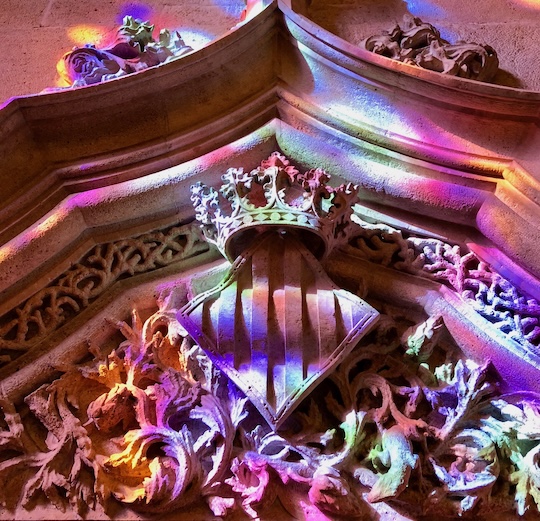
During our stay we discovered many historic sites. One of the highlights was the Llotja de la Seda. It is a Gothic building of the 15th century that served as the silk exchange. The art work was impressive.

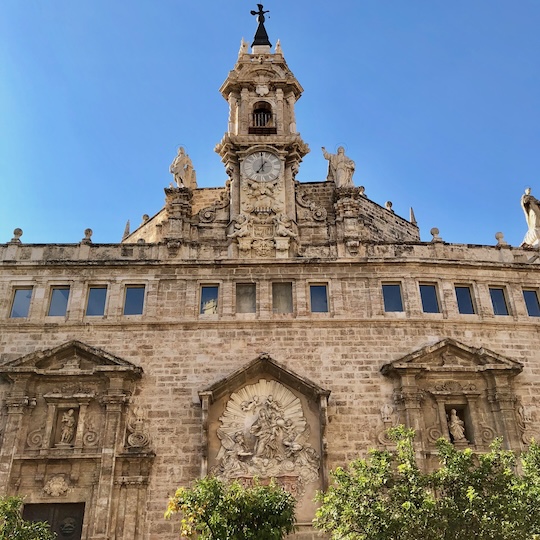
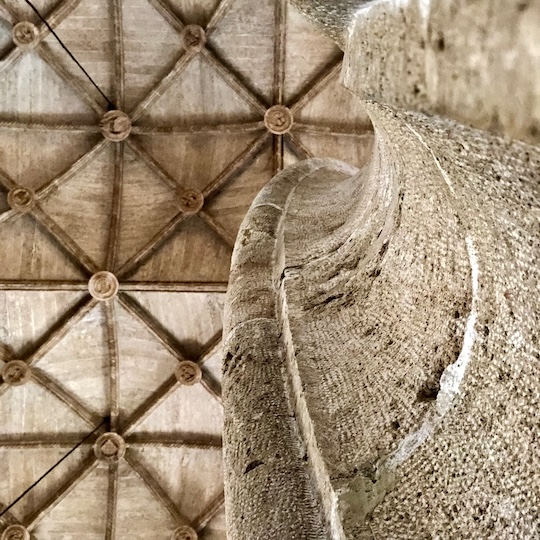
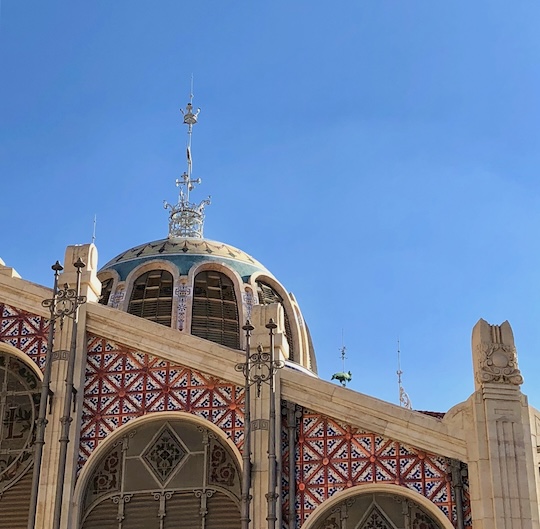
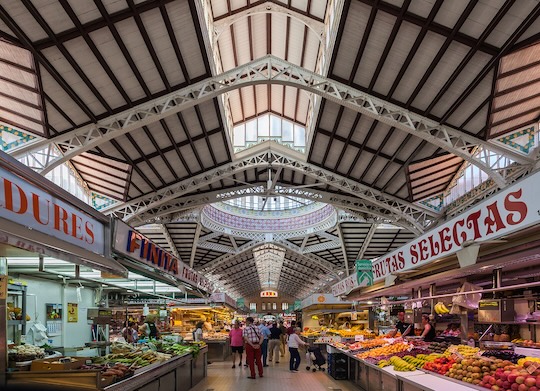
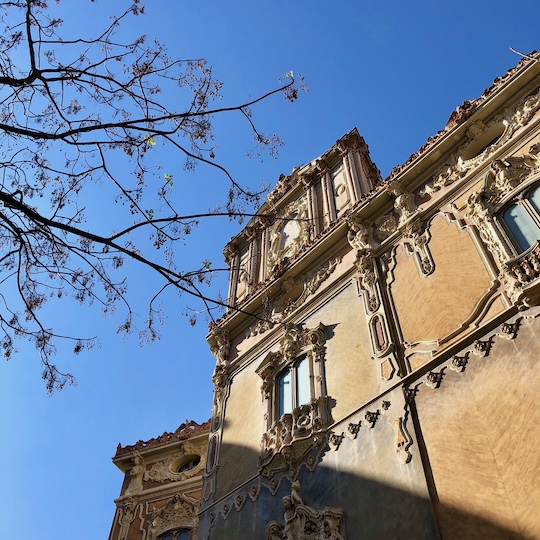
The modernist style market hall, the Mercat Central, is a must see, too. The Valencian Art Nouveau is very impressive. They reminded us of the many beautiful buildings in Barcelona in the style of Catalan Modernism.

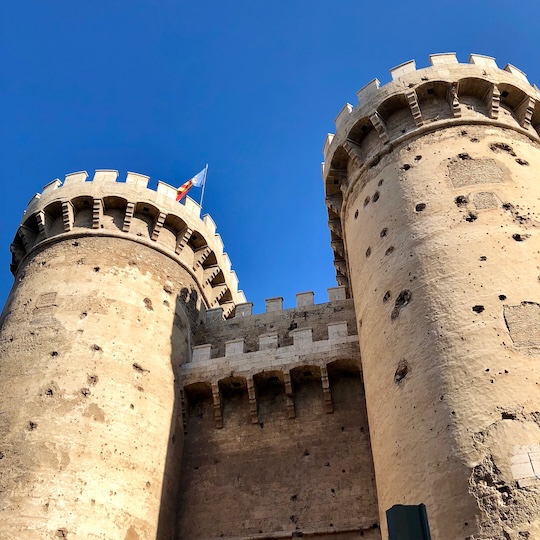
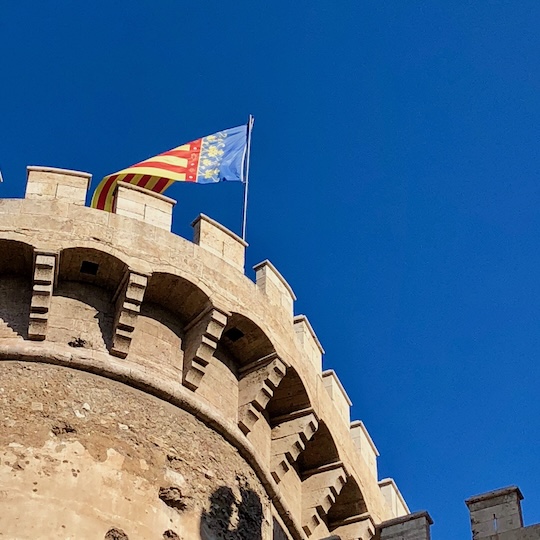
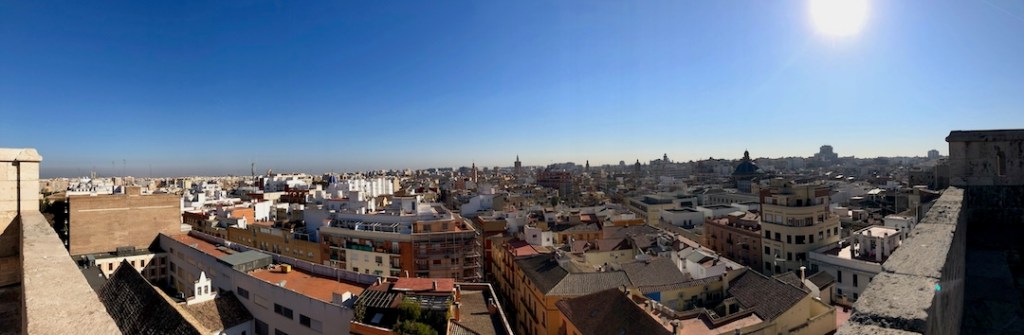
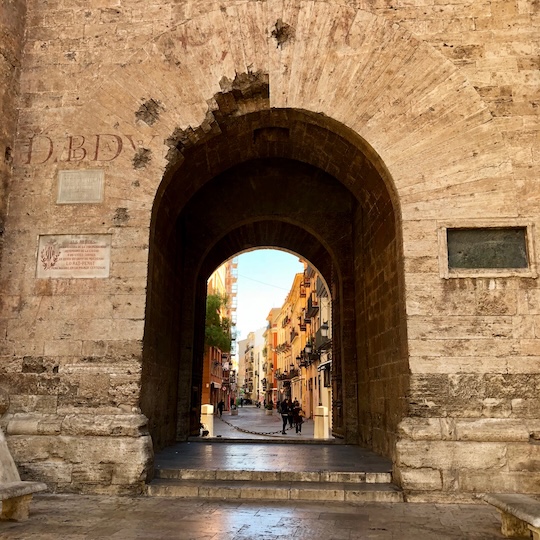
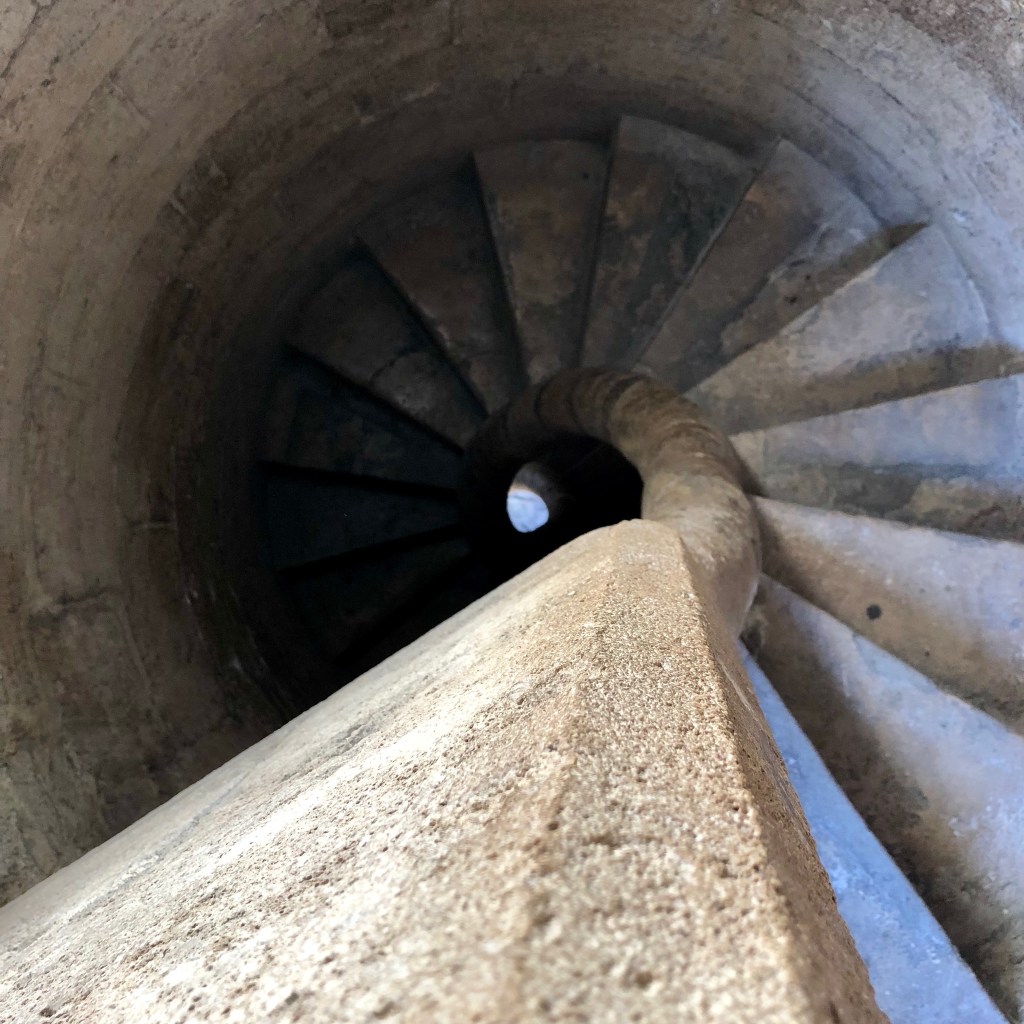
We also climbed up one of the city gates, the Torres de Quart, late gothic military architecture, completed in 1460. You can still see the impact of the canon balls that were fired on Valencia during the War of the Spanish Succession (1700-1714). You can walk up the tower and have an amazing view over the city.
Further impressions from Valencia below.

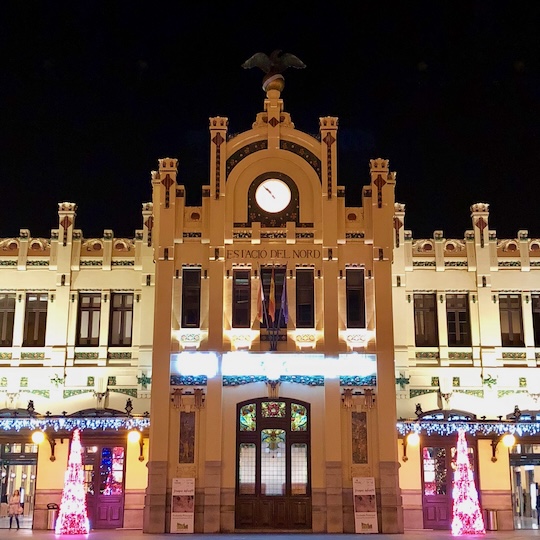
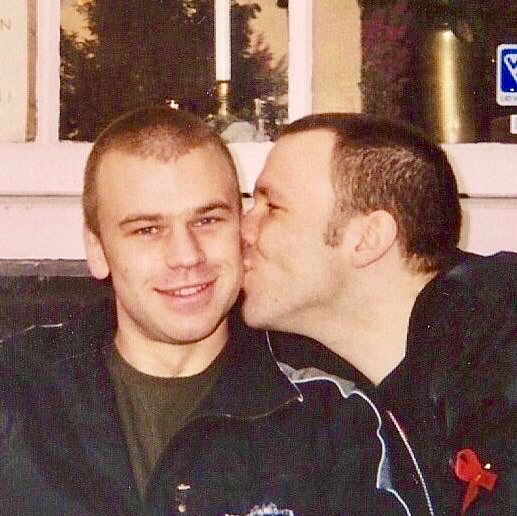
While visiting the city a photo popped up from 1999 where we had travelled to Amsterdam for the first time together. As it was exactly on the same day 18 years ago we decided to re-stage it with the following result.

Valencia vs. Barcelona
Visiting Valencia is absolutely worth it. The city felt like a smaller version of Barcelona. You will encounter many parts that feel rather local and non touristy. Of course the old town is busier but walk through the river bed to the sea. You won’t come across masses of people.
There are many parallels to the architecture of Barcelona. Historically Valencia is connected to Catalonia as well as both once were part of the important Kingdom of Aragón. Thus learning about the history is very fascinating. From Barcelona or Madrid you can easily take the high speed train (AVE) to Valencia. It is a fast and inexpensive way to travel through Spain.
Discover more from Wild Paths Together
Subscribe to get the latest posts sent to your email.
