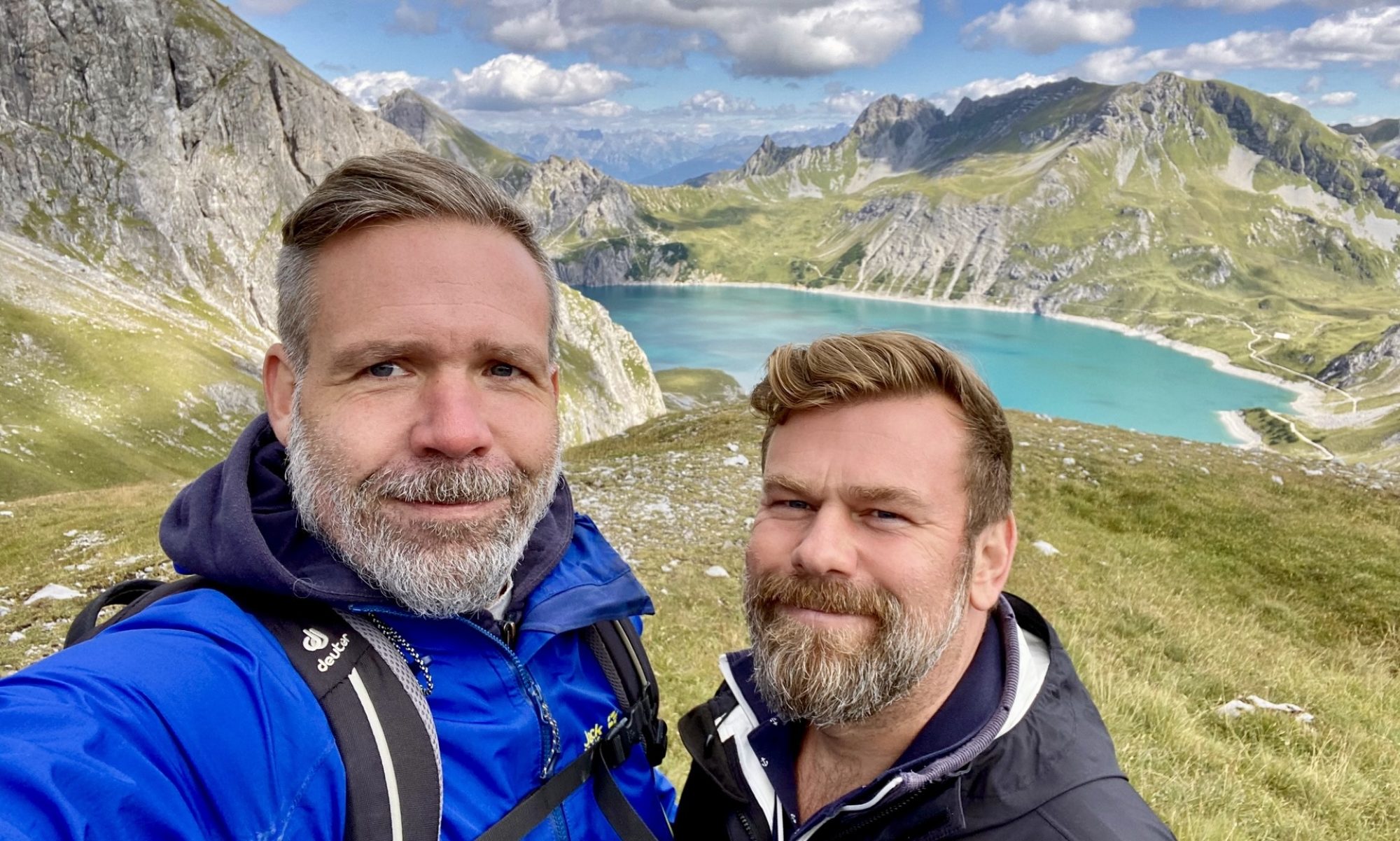
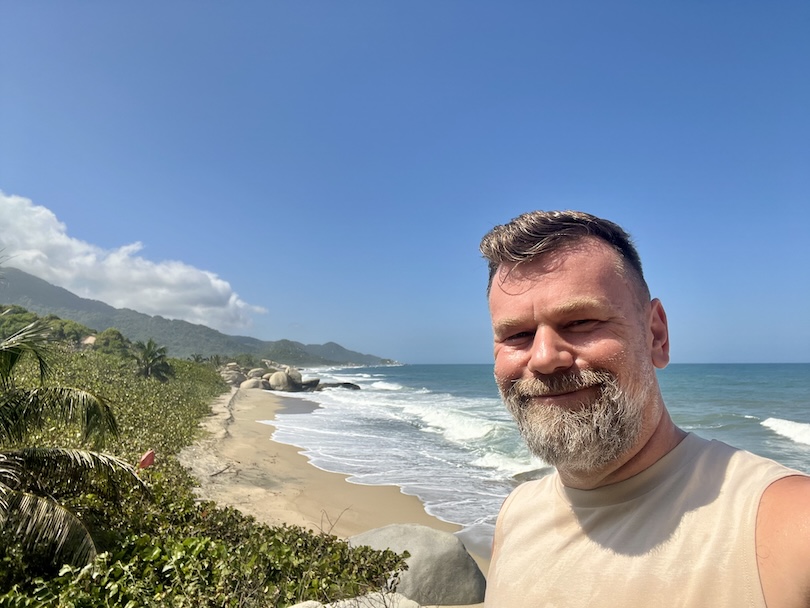
In January 2025 we spent a very pleasant week in Santa Marta at the Colombian coast. Whilst our main goal was to go scuba diving we also did a day trip out of town to Tayrona National Park. It is conveniently located about 30 kilometres to the North of the city.
We decided to use the local bus instead of taking the more touristy option to go by boat to Tayrona. For that we had to go to the “Mercado Público de Santa Marta”. The taxi driver brought us there and explained where the bus would leave. However, we did not have to search for long. A bus passed by and stopped for us asking if we would like to go to Tayrona. So we hopped on board and off we went. We had bought some water supplies but in Colombia you never have to worry. Many people are very enterprising and will sell you food and drinks along the road. At a red traffic light for example people would sell you water through the window of the bus.

The bus ride took us about an hour. The ticket cost about 4 USD per person that they charge you during traveling. The crowd was a mix of tourists and locals getting home or to work outside of the city. As the entrance to the National Park is controlled you will need to get to the main gate.
Conveniently, the bus stopped just in front of it and park personell guided us to the reception where we had to buy our tickets and a mandatory health insurance. All in all it was probably about 17 USD to get into the park.
From here you had the option to walk all the way to the beach for about three hours to an area called Cabo de San Juan. Alternatively, you could use a mini van for 2 USD that shortened the walking distance by one hour. As we did not know what would await us and considering the temperatures (around 30 degrees Celsius) we hopped on to one of the vans and started our discovery.

Inside Tayrona National Natural Park
The park is called Parque Nacional Natural Tayrona in Spanish language. It is about 150 square kilometres big (58 square miles) and was established in 1964. It was named after the Tairona indigenous people who once lived here. Today, the region is home to the territories of the Arhuaco, Kankuamo, Kogi, and Wiwa indigenous peoples, with approximately 30,000 inhabitants. For many, the land is sacred. They consider it their duty to protect, nurture, and preserve the ancestral territory. Due to the increasing tourism there are regularly conflicts with the indigenous people. No wonder, nowadays more than 500,000 tourists from all over the world visit Tayrona on an annual base. However, upon request of the indigenous community the park has been closed on a regular base since 2015 as to their believe a spiritual cleansing is necessary to ensure the continued existence of humans, fauna, and flora.
Michael and I started discovering the park after the mini van left us at a designated spot where we had to return if we decided to go back the same way. Alternatively, we could have tried to get back on a boat. The van drive was less than 10 minutes passing by different resorts. I had read before that it was possible to stay over night in the park or even spend a full vacation there.

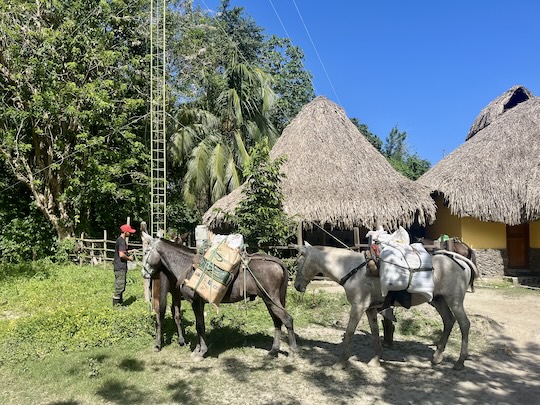
As we needed to find the path leading to the Caribbean beach we asked some locals selling water and souvenirs and they made us aware that we also could get there on horse back instead of walking up and downhill for two hours. Both Michael and I are not very fond of horses and the idea rather scared me.
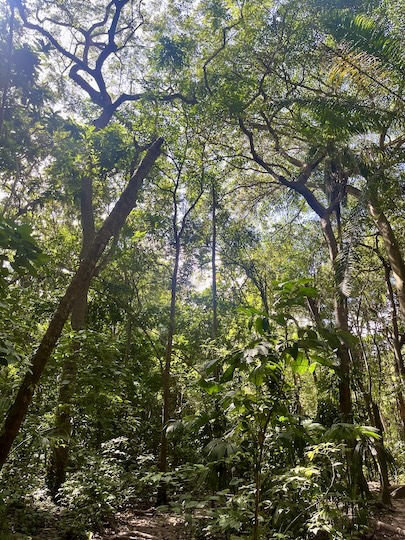
Thus we walked. Actually it was much easier than we thought. There was no direct sun as we walked through rather dense forests. The vegetation was intense and very green. We followed a well prepared path and for the first hour we were on our own.
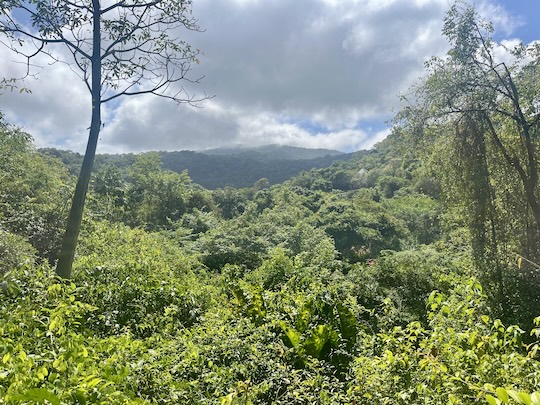
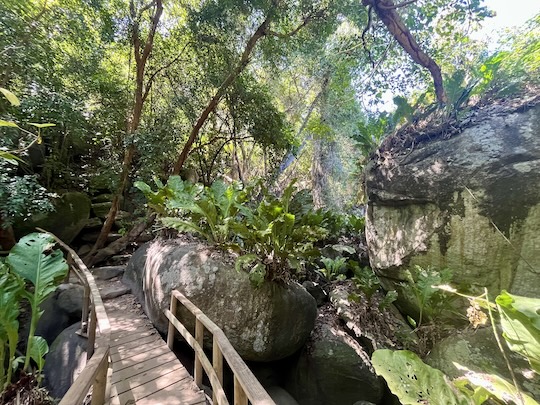
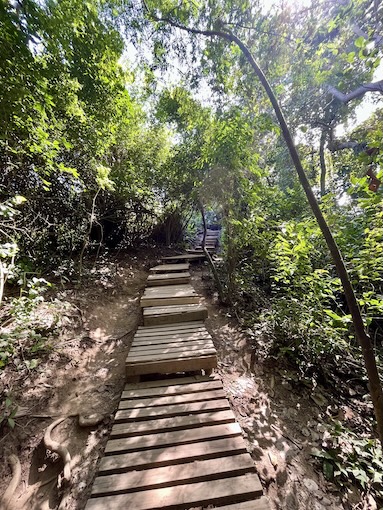

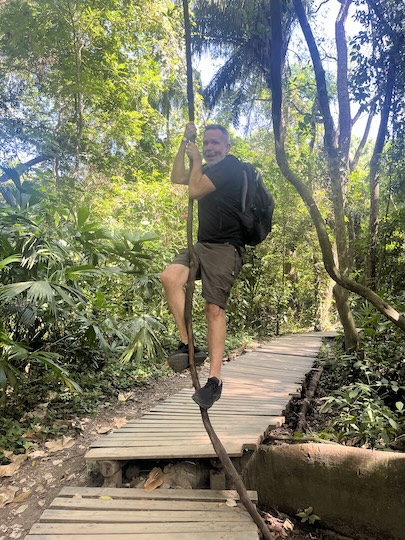
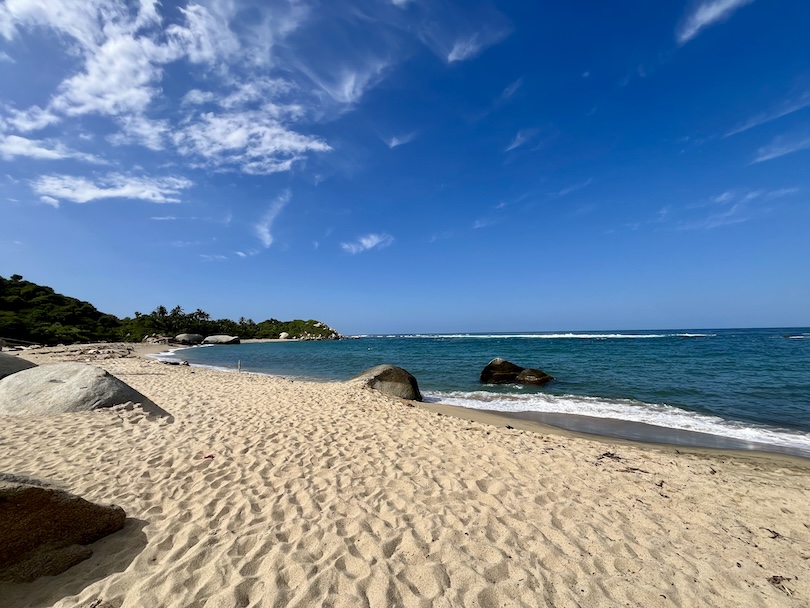
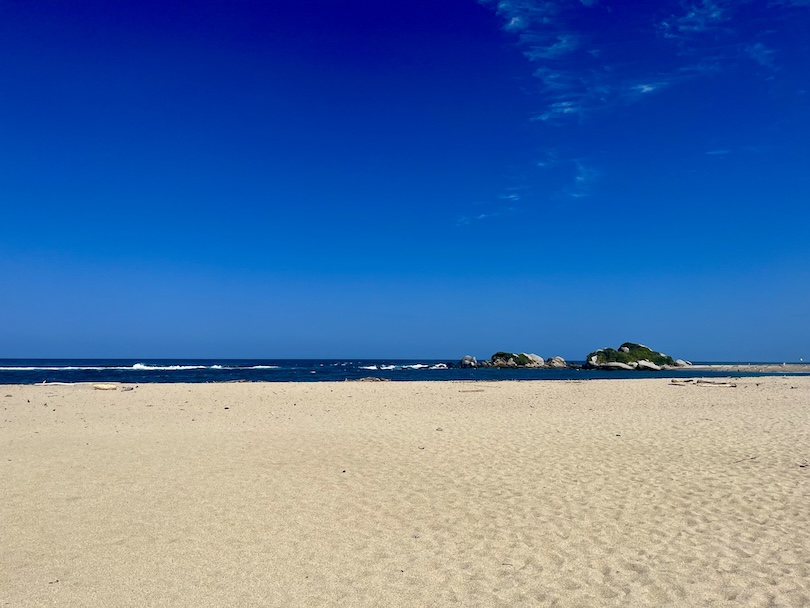
Time flew by and suddenly after the path had twisted downhill along the slopes we could hear the sea surf. And shortly afterwards we could see the beautiful Caribbean coastline.
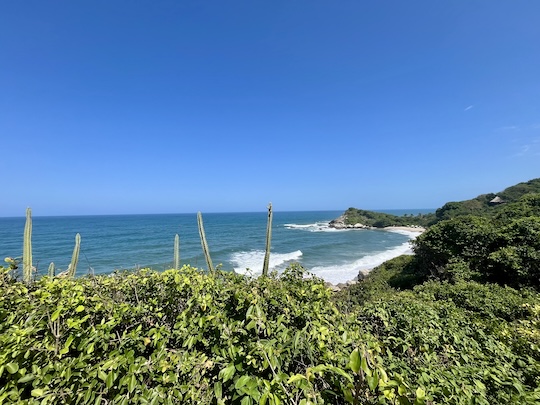

Now we met more and more tourists. We even spottet apes along the way. But most welcoming was the ice cream stand in the forest after you had to walk along the beach in the burning sun! They had a 99% success rate as everybody passing buy bought some refreshing ice cream. We loved that they took care of the environmental aspect. They would not give you the plastic packaging of the ice cream so that this would not end up in nature. The ice cream itself was on a wooden stick.


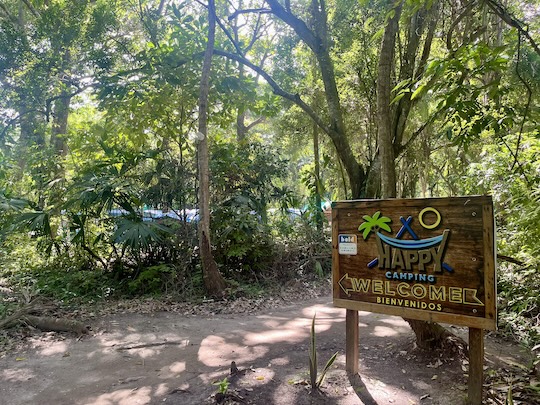
We entered a very touristy area where you could rent huts or do camping. It suddenly got very busy as it is one of the major attractions in Santa Marta to be brought to Tayrona by boat. Thus we found many beach restaurants that were quite full.

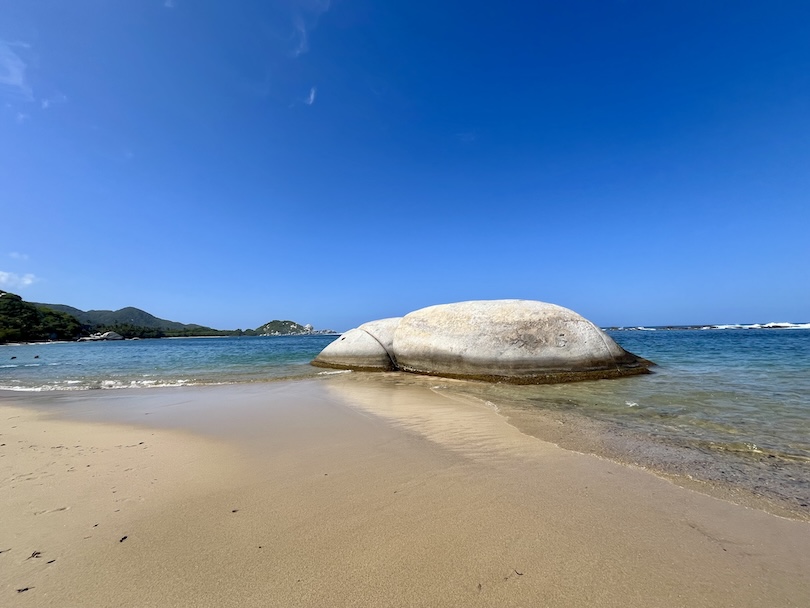
Nevertheless, the beaches were beautiful and it was a pitty that we had left Santa Marta far too late. We were not sure about when the last bus would leave to the city again so we were a bit in a hurry and had a quick lunch (food was so/so). Unfortunately, we did not make it to Cabo de San Juan with apparently the most beautiful beaches of them all! Something for our next visit!
Our way back was uneventful and in the end we left far too early. Until at least 6 pm it is easy to get transportation back to Santa Marta.
How to get to Tayrona National Park
Visiting Tayrona is a full day trip. So plan in sufficient time.
- In Santa Marta ask your taxi drive to bring you to the Mercado Público to the bus station for Tayrona.
- Alternatively, go to Taganga by taxi and take one of the boats to Tayrona. They will bring you directly to the beaches and restaurants in the natural park.
- If you take the bus they will tell you when to leave the bus for the entrance of Tayrona. It is approximately one hour away from the bus station in Santa Marta. The costs are around 4 USD per person.
- Register at the entrance. Do not forget your ID or passports as they are required to enter the park. You also need to buy the health insurance but they will tell you.
- Take the mini van for 2 USD to shorten your trip. You will safe one hour of walking in a not so spectacular environment.
- Find the wooden path where the mini van will drop you off. You can also chose to get to the beach on horse back. People will offer this to you.
- In case you feel unwell they have a tent for medical treatment close to where the bus dropped you off.
- Walk along the wooden path for about two hours. There are no crossings thus you cannot get lost as long as you stay on the path.
- Do not leave the designated path.
- Once at the coast you will find easily restaurants and snack bars offering food and water.
- The most beautiful area is at Cabo de San Juan. You need to plan in more time to get there – from the bus probably three hours.
- The last bus back to Santa Marta leaves around 6 pm. Plan in enough time to walk back in case you do not take the boat.
What to bring when visiting Tayrona National Park
- Bring a bottle of water or buy it before you start your two hours walk inside the park.
- Bring sun screen. The beach is very sunny and the sun is very intense.
- In case you travel in a rainy season bring repellent against mosquitos and other insects. Then it may be advisable to wear long trousers, too.
- Do not forget your ID or passport. It is required when entering the park.
- Have a decent condition. Whilst we did not find it very difficult to walk for several hours up and downhill the climate can have an impact on your body. It is hot and humid though most of the time you will walk in the shadow.
Happy travelling!
Christian Heide
Discover more from Wild Paths Together
Subscribe to get the latest posts sent to your email.

One Reply to “”