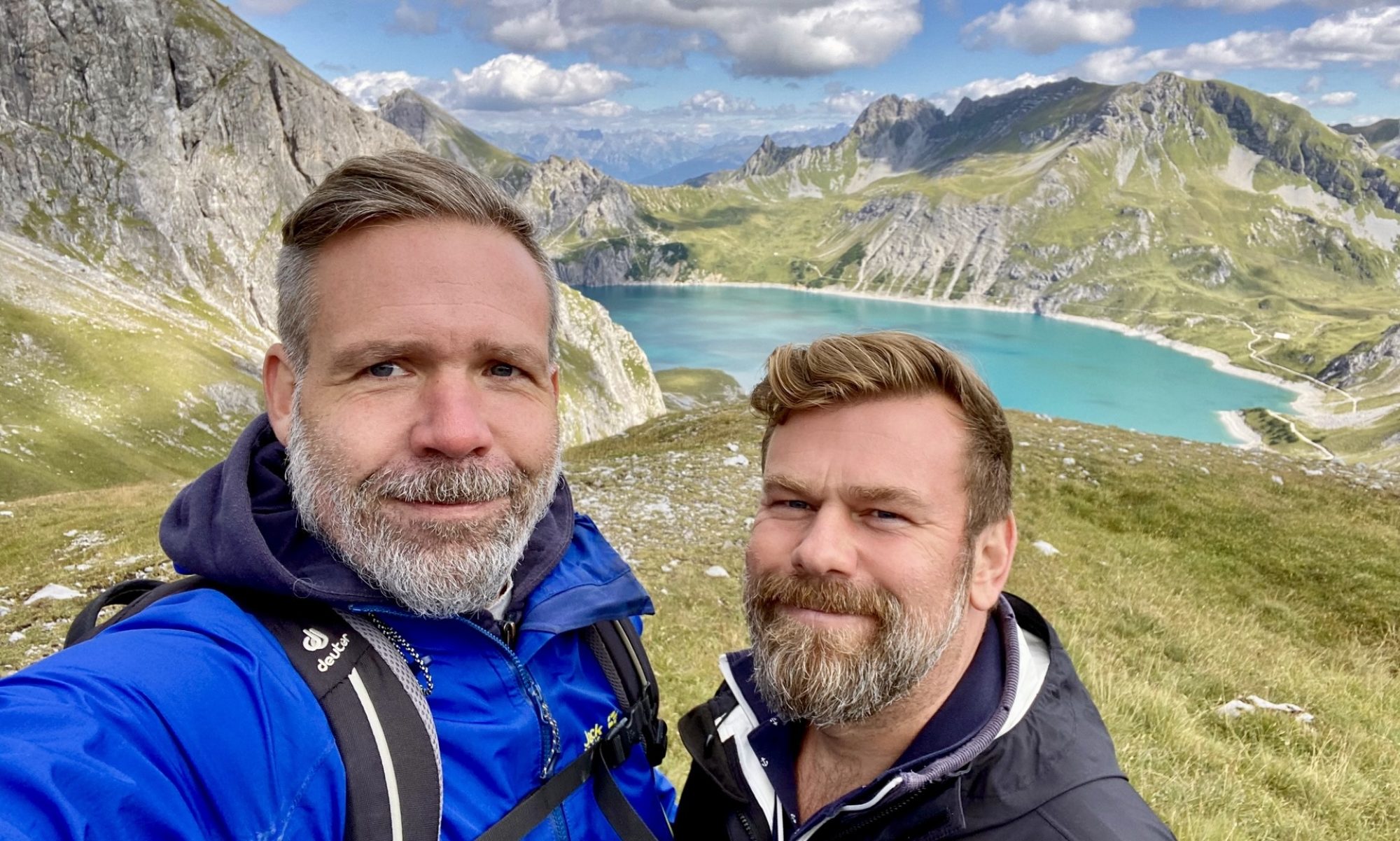

In October 2009 we went on our second trip to the Middle East. We combined the Arab Emirates with Lebanon and Damascus in Syria. The latter was our final stop during our holidays and it became a trip that we will remember all of our lives: We saw the wonderful Umayyad Mosque, the old markets of Damascus and dived into the local underground LGBT life.
Getting to Damascus by taxi

We took a taxi from Beirut to the outskirts of Damascus. This was very cheap and the taxi driver helped us with the immigration documents at the Syrian border . Of course this was quite an adventure. Once in Damascus the taxi driver ordered a local taxi to pick us up and bring us to our hotel.
We found a great boutique hotel (unfortunately we do not remember the name) in the old town of Damascus for three nights. This was very close to the old market.
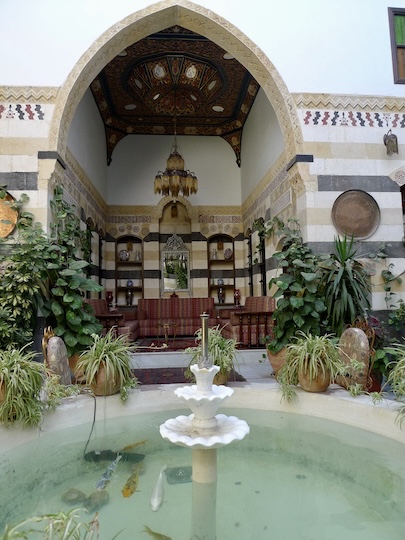
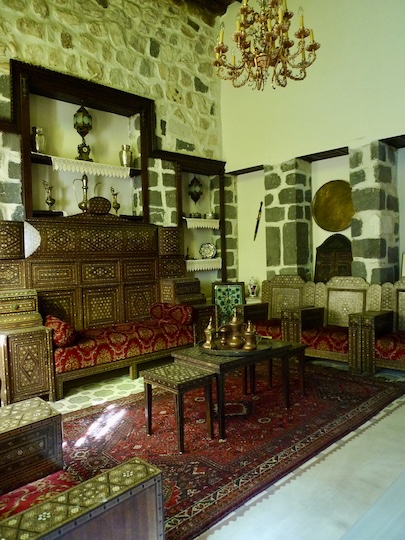
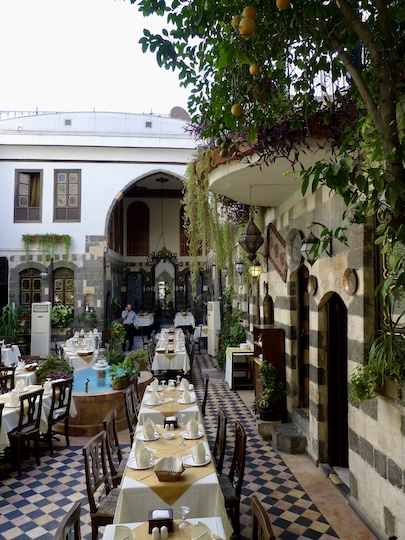
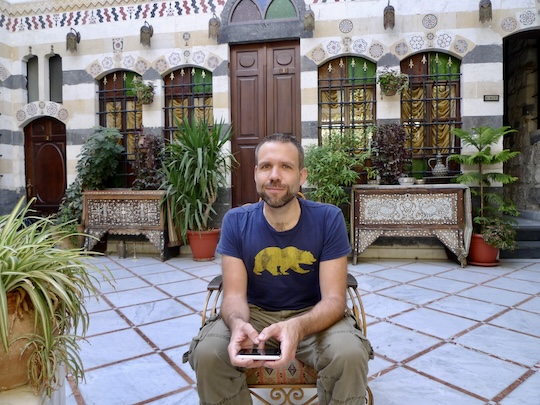
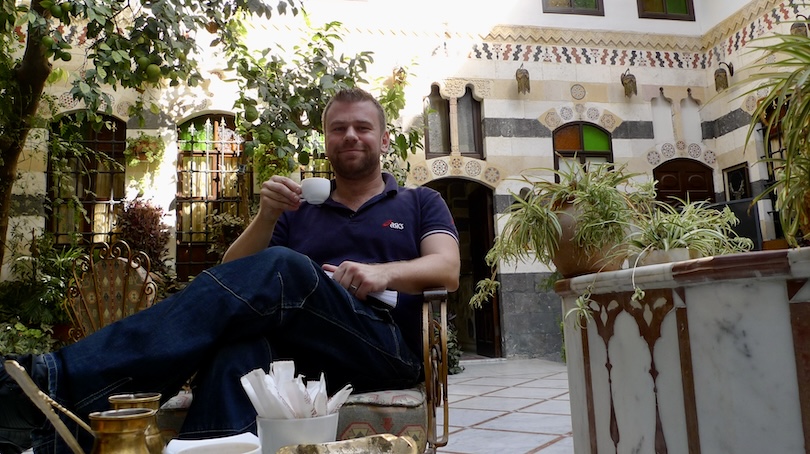
It was the first time that we travelled to a totalitarian country and we certainly had doubts if we should do so – especially as a gay couple. But in the end our curiosity and the ease of travelling to Damascus won.
We walked around the central city quite a bit during those days and enjoyed many impressions during our walks. Especially, the history around us was fascinating. Damascus is the oldest capital city in the world and one of the oldest continuously inhabited cities in the world tracing back to the 3rd millennium BC. We soaked in the local culture and habits. All seemed so different from Europe. During those days we felt very safe all the time.

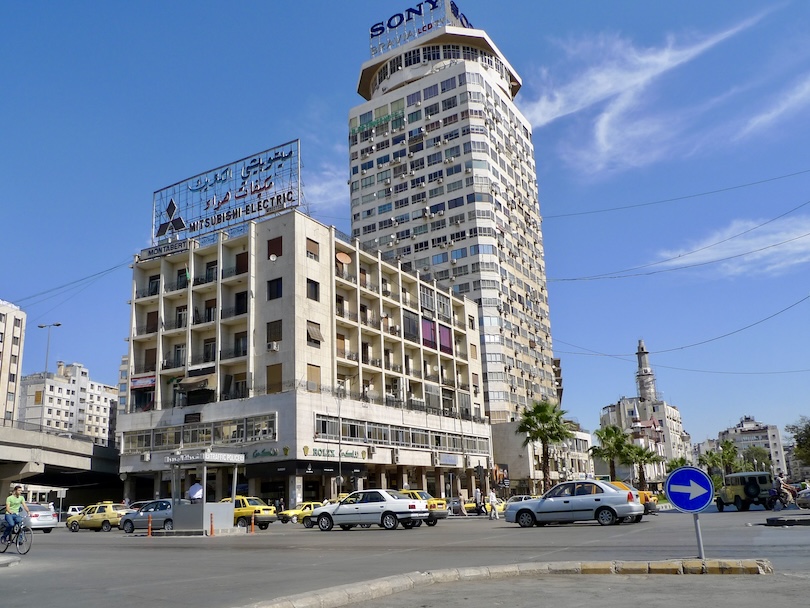

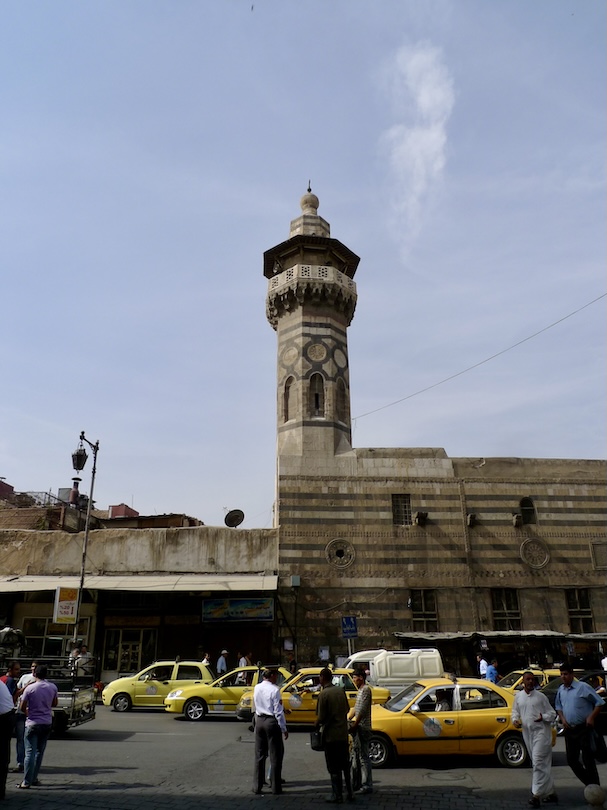
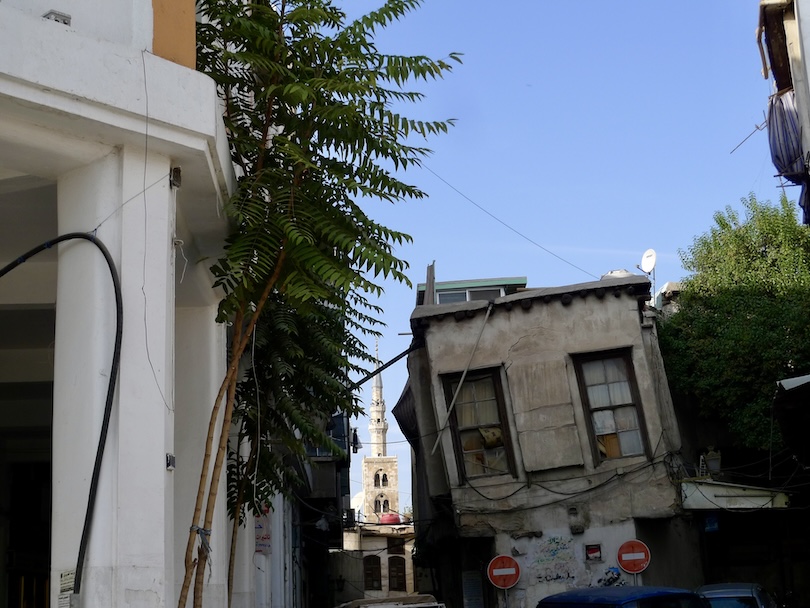
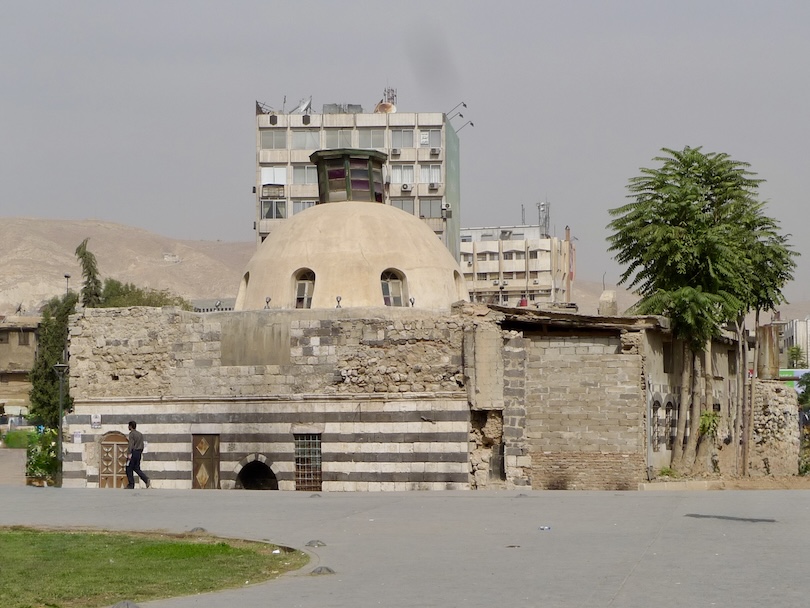
However, most beautiful to us were the old markets and the Umayyad Mosque.
The old souqs (markets) of Damascus
When you stroll through the historic center within the formerly walled city you will come across several old markets – so called souqs – with different historic purposes.
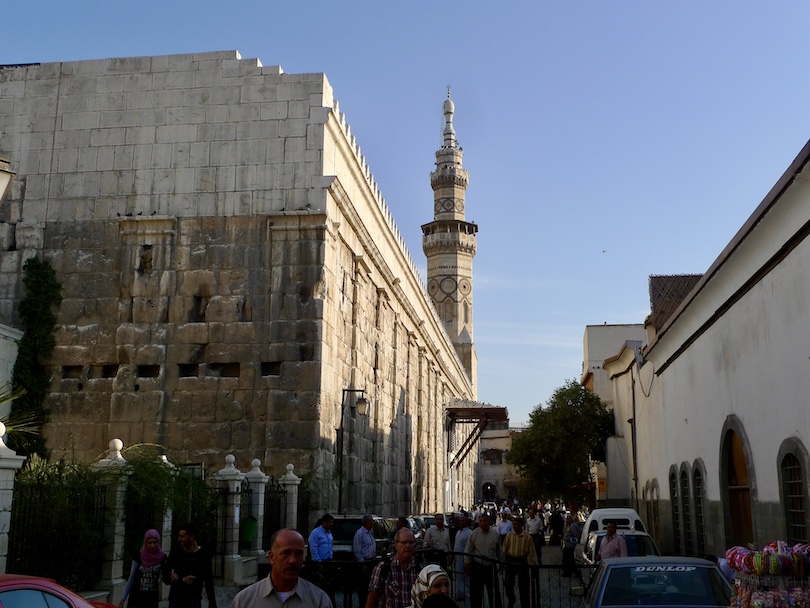
For example, the entrance to the Al-Hamidiyah Souq lies within the remains of the ancient Roman Temple of Jupiter that on its other end was reused for the construction of the Umayyad Mosque.
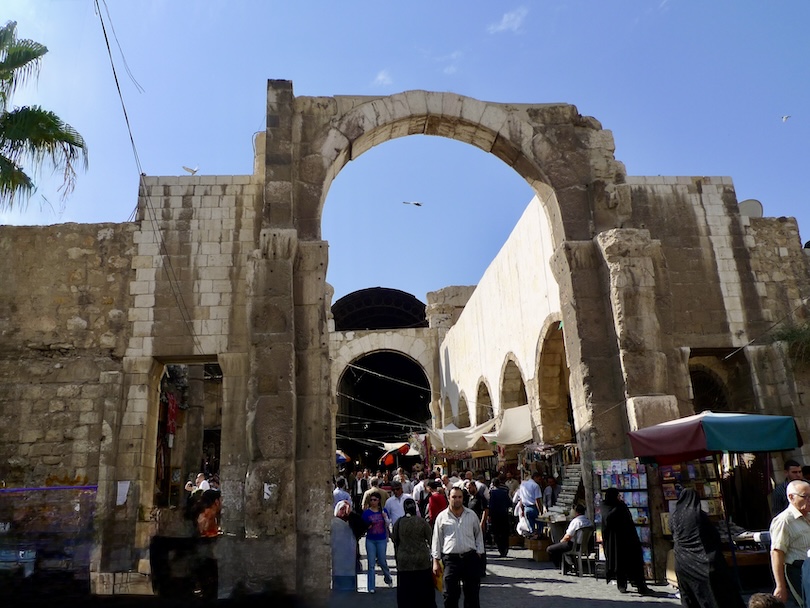
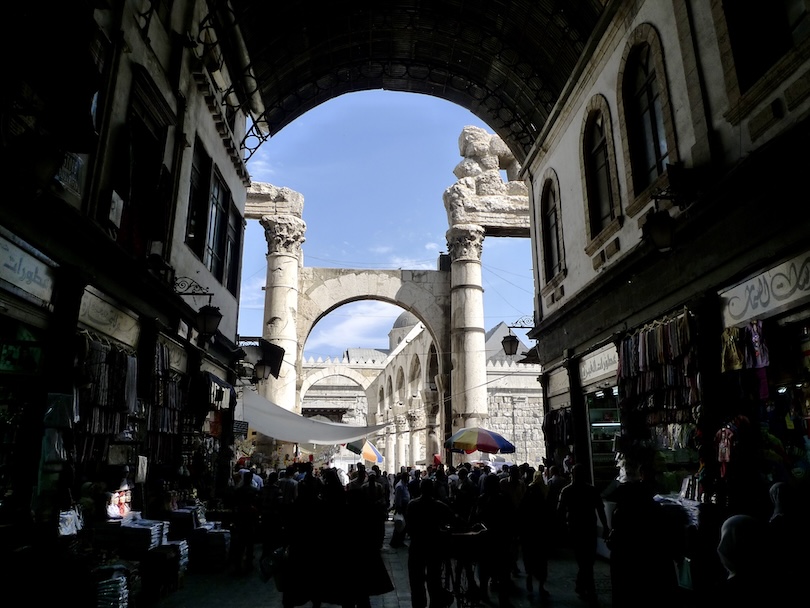
The market of Souq Midhat Pasha is the oldest inhabited street in the world. It was built after 64 BC during the Roman Empire as a Street of Pillars. The Al-Buzuriyah Souq is also a historical market famous for its spice vendors.
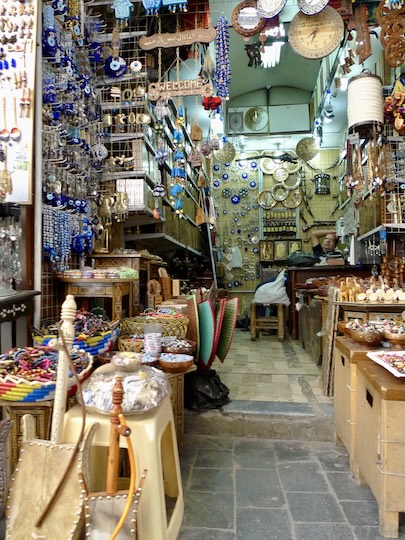
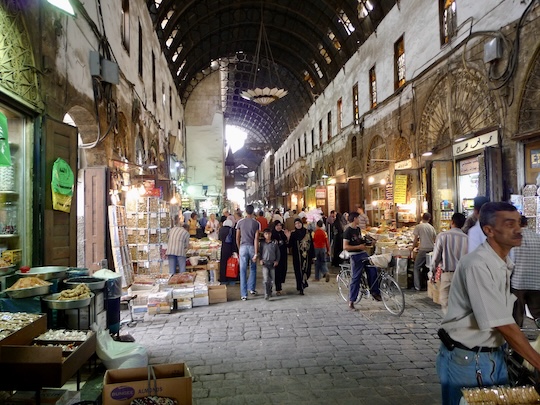
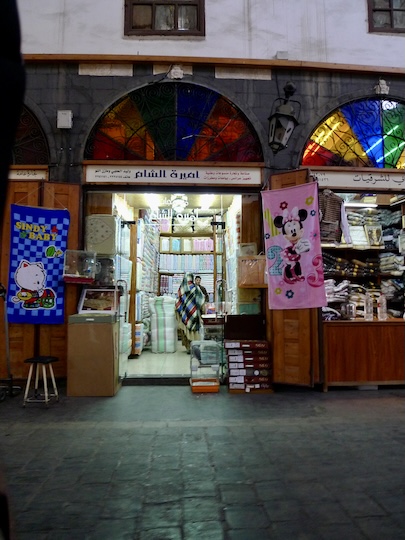
We absolutely loved strolling over the markets and it was one of our favourite spots where we returned to every day.
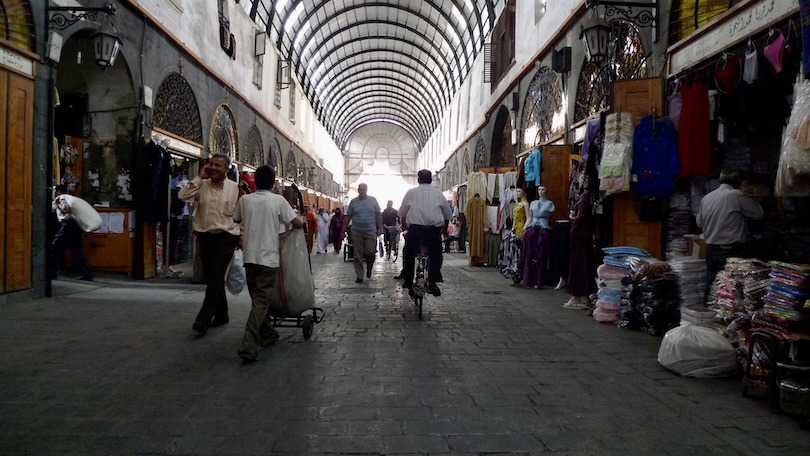


The Umayyad Mosque of Damascus
The mosque – also called the Grand Mosque of Damascus – is situated in the old town and is one of the oldest and largest mosques in the world. The mosque is open to the public and we were impressed by the size, the beauty and the long history of this religious place.
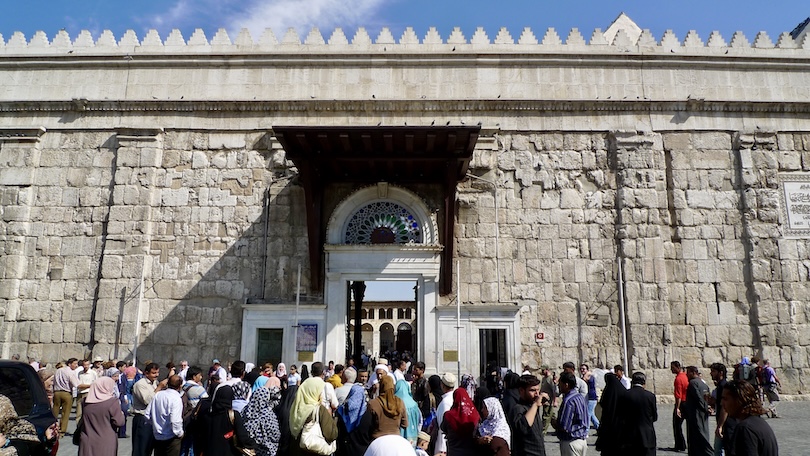
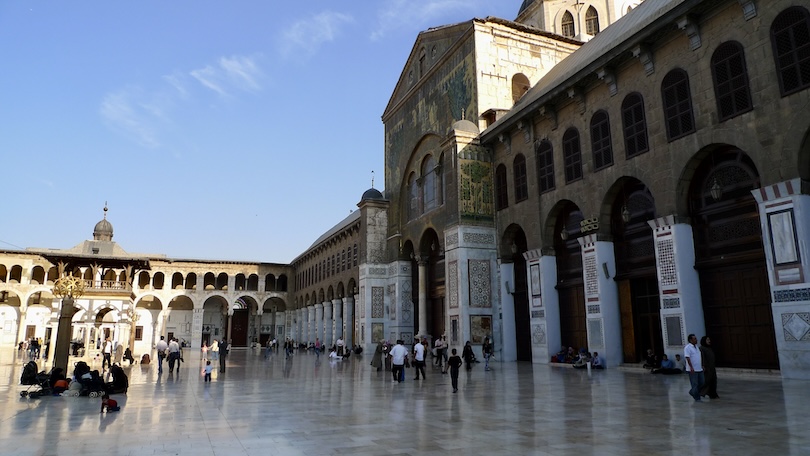
The Umayyad Mosque site has been sacred since the Iron Age, originally hosting a major Aramaean temple dedicated to Hadad-Ramman. One stone survived from that time and displayed in a national museum. The Seleucids later rededicated the temple to Zeus, and after Rome took Damascus in 64 BC, it became a grand temple to Jupiter (impressive remains can still be seen today). In 391, the Byzantine Emperor Theodosius I converted the complex into a vast cathedral, seat of the Bishop of Damascus.
After the Hagia Sofia and the Blue Mosque in Istanbul, the Umayyad Mosque was only the third mosque that we have visited. All three are most impressive: Hagia Sofia with its 1600 years of history as Christian church and then mosque, the Blue Mosque’s beauty and the Umayyad Mosque for its size and decoration.
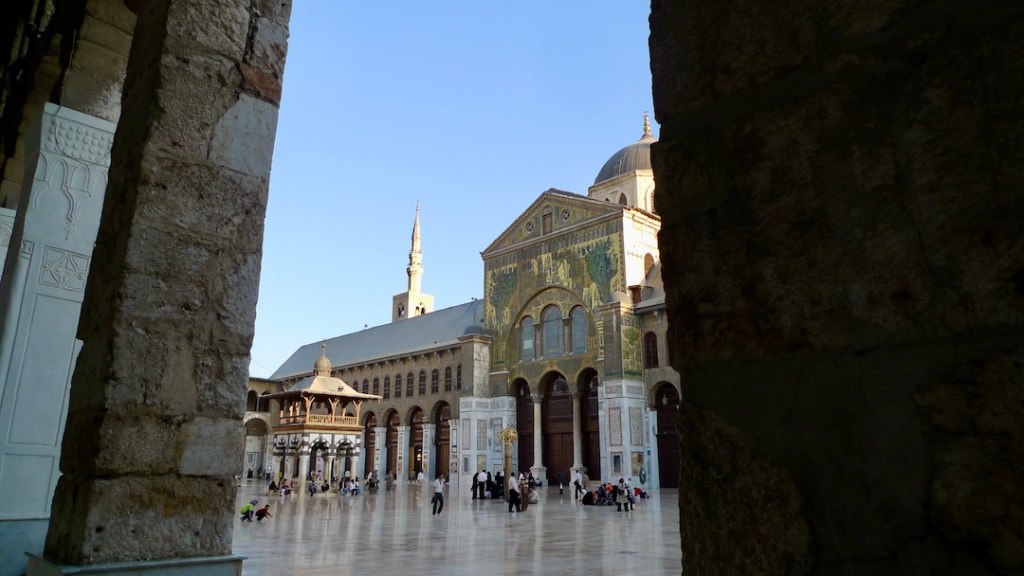
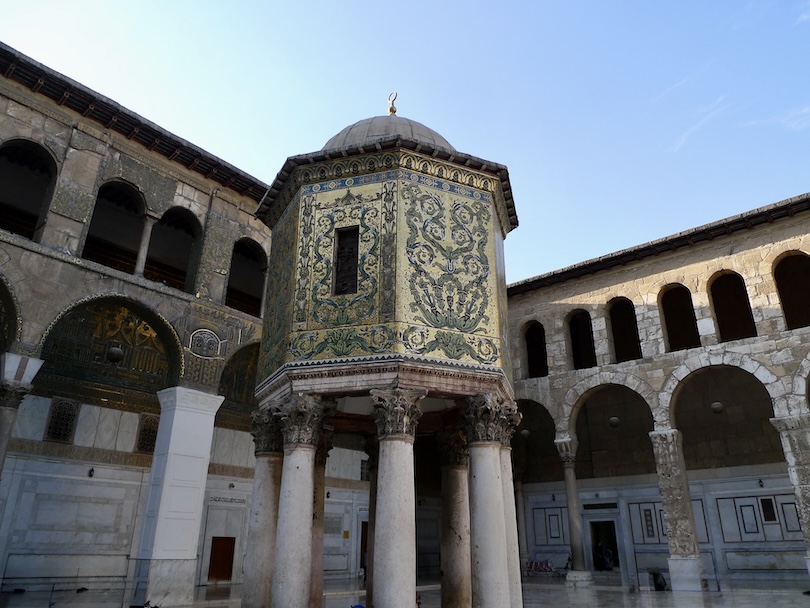
Especially, the remains of the gold mosaics make the mosque very unique. They say that the original mosque had about 4000 square meters covered with gold mosaics. You can only imagine the magnificence back then.

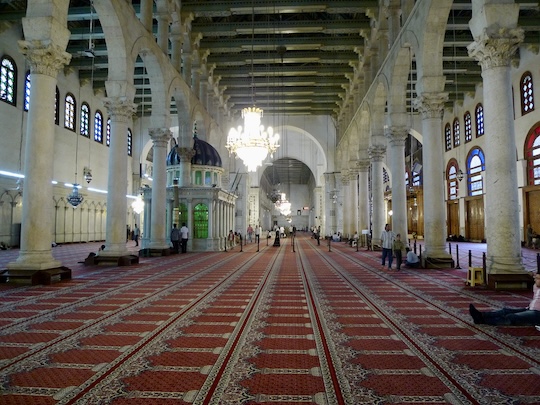
We entered the mosque and visited the huge praying area. Furthermore, when you walk around the mosque you can see the minarets that were added during the course of the centuries. When we left the mosque we were in awe.

LGBTQ Life in Damascus
We were not sure what to expect in Damascus in 2009 except from the idea that there had to be gay life in a more hidden way as Syria was a totalitarian country. This in contrast to the rather open Lebanon where the whole gay Arab world partied in the many bars and clubs. And indeed we encountered some very surprising spots in the city!
We had met a German guy before who actually had briefed us. For example, we went to a café just outside the old town that was a popular meeting spot. Getting in touch with local was a big problem though. English was not spoken much! However, we spoke to a guy who actually was a big fan of Borussia Dortmund, my local soccer team!
On Thursday afternoon we went to an area in the city (we do not recall the name) where gay men made contact while driving around the street blocks with their cars. For us this was very surprising as it was rather open in the public and the spot pretty well known!
Our biggest adventure though was to attend an underground gay party in the outskirts of Damascus. We had become friends with George, a local, who spoke very well English and he invited us to join that party. So we went with him and some of his friends by taxi to the outskirts of the city. The drive must have taken at least 30 minutes. We had no clue where we were going neither did we know any of the other friends. In the end we arrived to a quite nice villa with a pool where we paid 10 dollars to get in (we also had to bring drinks in advance as we were told that there were never enough drinks!). The villa served as a club and safe space for gay men to have fun, dance, socialise and to be able to be themselves in a system that is oppressing queer people. We enjoyed an evening as being the attraction as foreigners attending the party and we found it all very exciting. In the end we took a taxi back to our hotel (there were no more drinks to be find in the villa). Of course we knew that it was a bit risky as the police could have raided the party but back then we were rather fearless and very curious. Furthermore, we believed that our German passport would grant us certain safety. I kept in touch with George for a while via e-mail but in the end we lost contact.
Returning home
We had to return to Beirut by taxi and then flew back to Dubai, rented a car and drove to Abu Dhabi from where we took off to Europe. We also passed by the back then not yet completed Sheikh Zayed Grand Mosque. The last night we spent in Abu Dhabi and met Carlos Augusto again who worked as cabin crew for Etihad Airways and who had arranged our plane tickets for us.

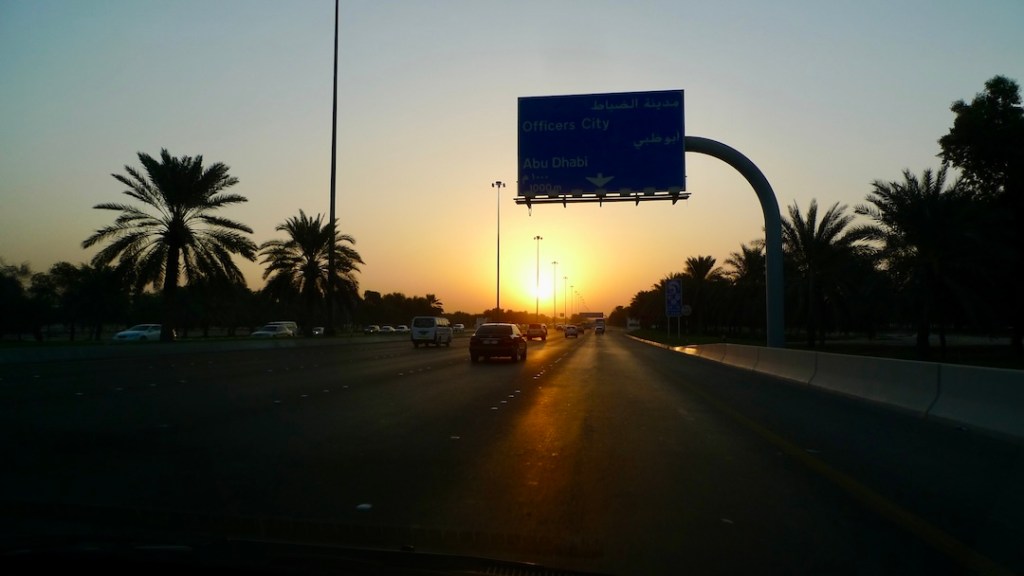
All in all, it was an absolutely amazing trip. Today I am so happy that we got a glimpse of Syria before the civil war and all its atrocities that were committed and many beautiful places that were destroyed.
Discover more from Wild Paths Together
Subscribe to get the latest posts sent to your email.
