We returned to Bogotá again in January 2026 as we were quite taken by the city in the year before. Thus it was a great starting point for more adventures in the new year.
We did quite some sightseeing during our past visits but also this time we discovered new places. We especially enjoyed some off-the-beaten-track activities.
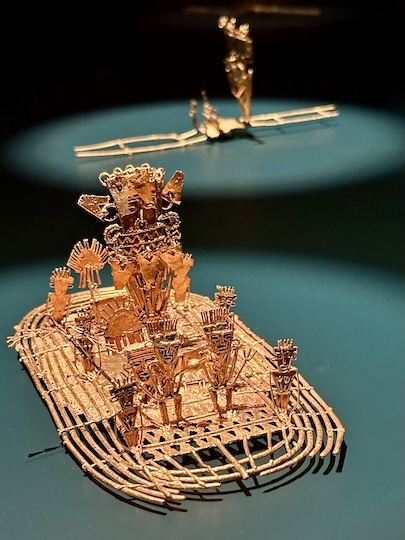
We also revisited the Gold Museum as we loved it so much during our 2010 visit. As a base we chose to stay for four nights in the famous Zona T in Chapinero.
Zona T in Bogotá – a safe neighbourhood where to stay and eat
We had heard from Colombian friends that Zona T was a safe neighbourhood and also full of restaurants and nightlife. Thus we booked an apart hotel called Bo Living 81. It was a decent place, very clean with large apartments for little money. And indeed we felt safe all the time and even at night when walking back to our hotel.
The area is full of bars and clubs – so expect a lively area especially on the weekends. Some of the restaurants – we tried Andres DC – even open until 3 am in the morning. The food in Andres DC was fine but the restaurant is massive. It is spread out over several huge floors. Generally you should expect a noisy environment when eating out in Bogotá. This is also the case in Andres DC. In their basement you will find a dance floor. That is probably why we had to pay a cover charge (25,000 pesos) to get in. This was quite unexpected as we only wanted to eat in the restaurant.
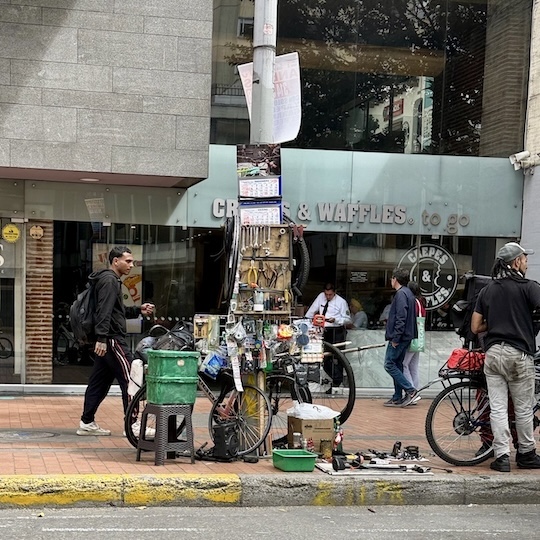
In the smaller streets we found little cafes for breakfast with terraces in the sun. We also started loving “Crepes & Waffles” – a Colombian owned restaurant chain that offers a quite successful formula. The quality of food is really good and prices are very reasonable. Their company policy is to especially support single mothers and providing for a stable income. 80% of the employees are women.
Another evening we had exquisite tacos at El Pantera Taquería in Calle 77a.
Off the beaten track activities in Bogotá
After having done most of the major attractions of Bogotá in 2025 we felt it was now time to discover the city more like a local. So we went cycling and also visited some parks away from the central city.
1) Cycling on Sunday – feel like a local
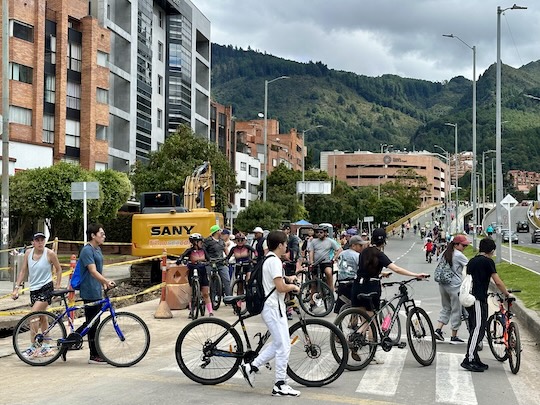
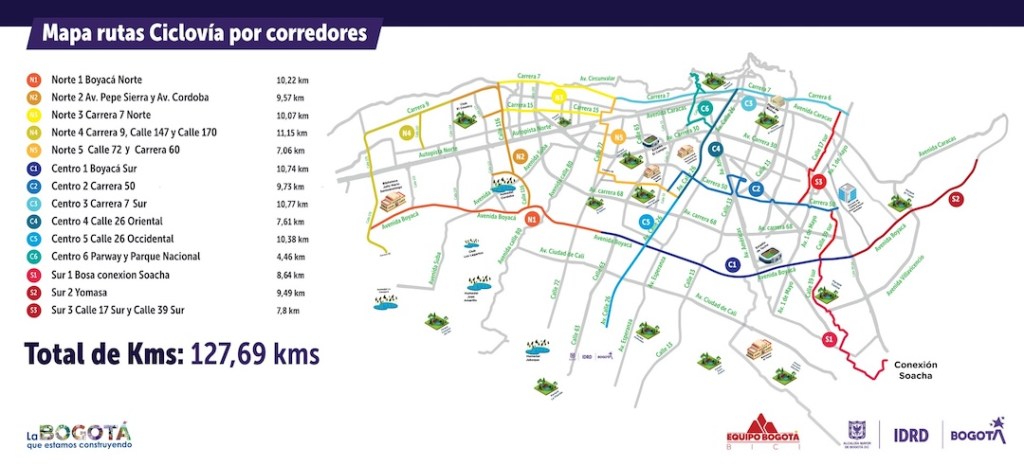
On Sundays, several major roads in the city are closed for traffic until 2 p.m. and opened for recreational activities, especially cycling. This is why these roads are called Ciclovía. However, it is not only cyclists who make enthusiastic use of the space. Runners and walkers also welcome this opportunity. As a result, Sunday mornings have become a popular time for recreation among locals.
This tradition has been going on for over 50 years. It began in 1974 as an experiment with a short 5-kilometer route. Today, more than 100 kilometers of roads are car-free every Sunday.
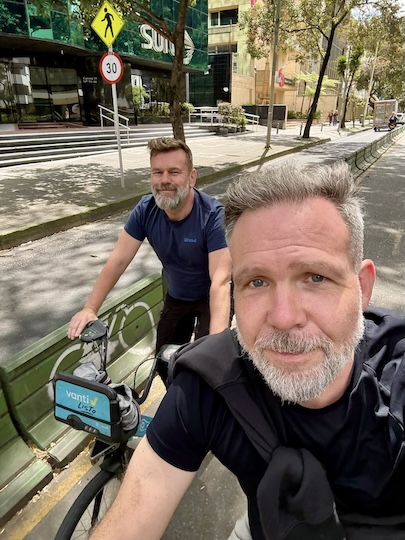
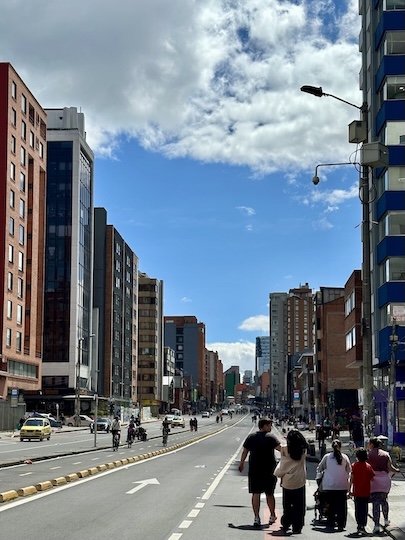
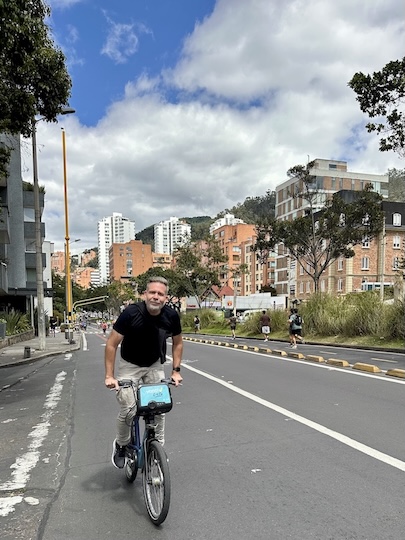
Michael and I decided to join this tradition and rented one of the many public bicycles. The public system is called Tembici. Luckily it is also open to tourists (unlike the bike system in Barcelona). Signing up was easy via their app. You can chose between different plans – monthly subscriptions for residents or a one-day-pass. For the latter you pay a small base fee and then per minute on top. We payed about 4 Euro for using the bikes for two hours. Not expensive at all!
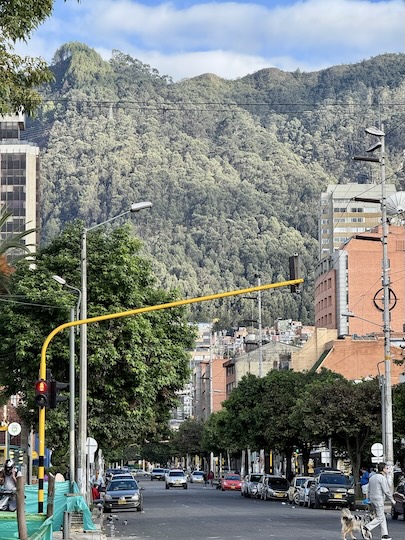
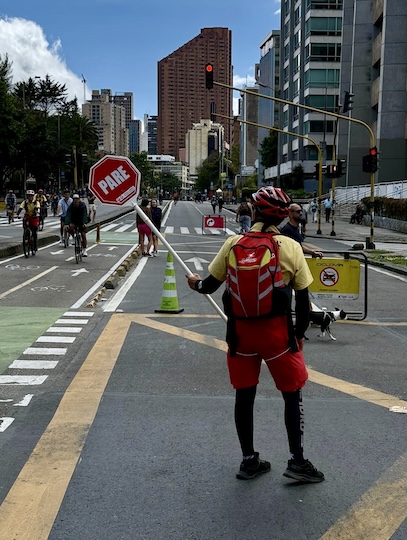
As we love cycling this was a very uplifting experience for us. Due to Bogotá being a car city (also with high pollution) it was wonderful to have this time available where you had less exhaust and less noise around you. To see so many people participating with all kind of activities shows how important those Ciclovía Sundays have become.
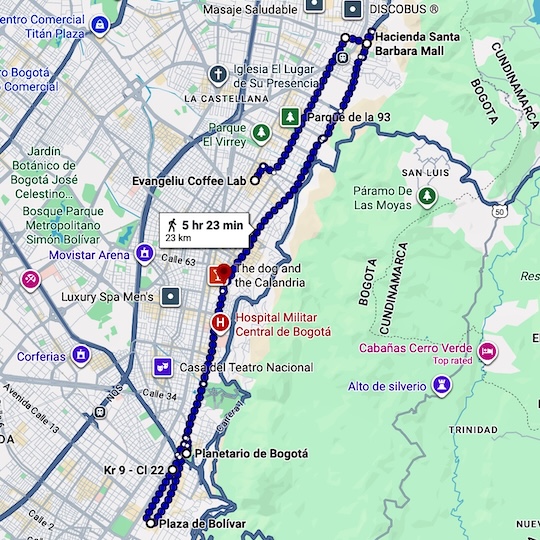
After two hours and 23 km non-stop on the bicycle we felt a bit tired and put them back into one of the many stations in Chapinero. We were very happy. It felt like a true local experience!
2) Bogotá Parks and Virgilio Barco Public Library
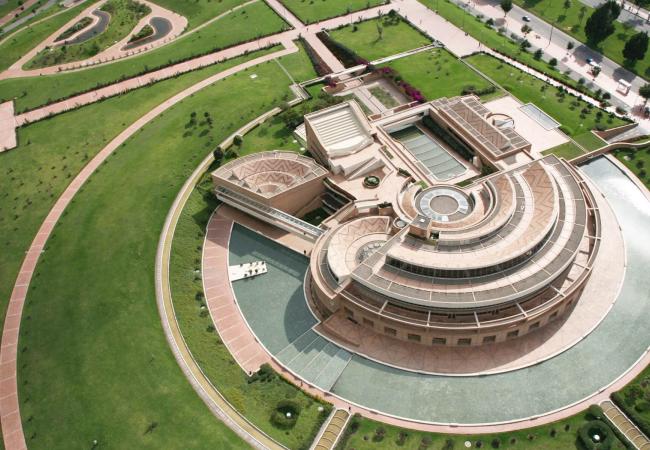
I had heard about the architectural highlight of the Virgilio Barco Public Library situated in one of the parks of Bogotá. After some research I noticed several parks that are connected to each other when leaving Chapinero towards the airport. So we felt it was a good opportunity for a long walk in a more quiet surrounding.
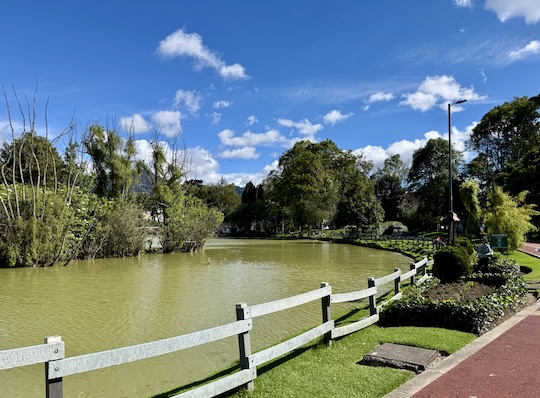
We took an Uber from our hotel to the Parque de los Novios, a cute park with a large lake in the middle. We strolled around it, had a coffee at one of the many food stands and enjoyed the lovely weather. As it was Saturday many locals hung out and enjoyed a leisure afternoon.
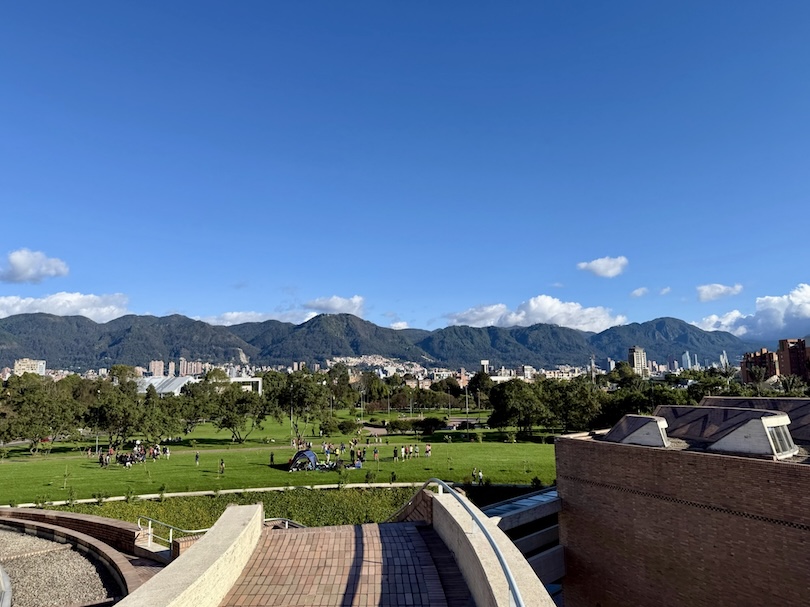
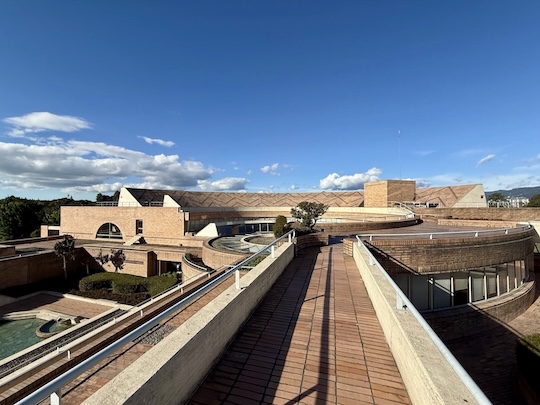
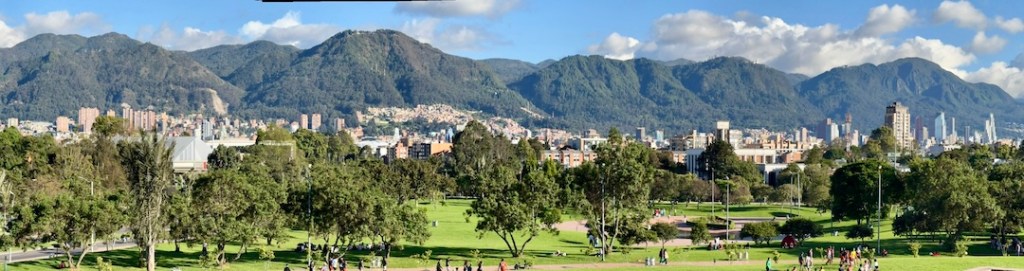
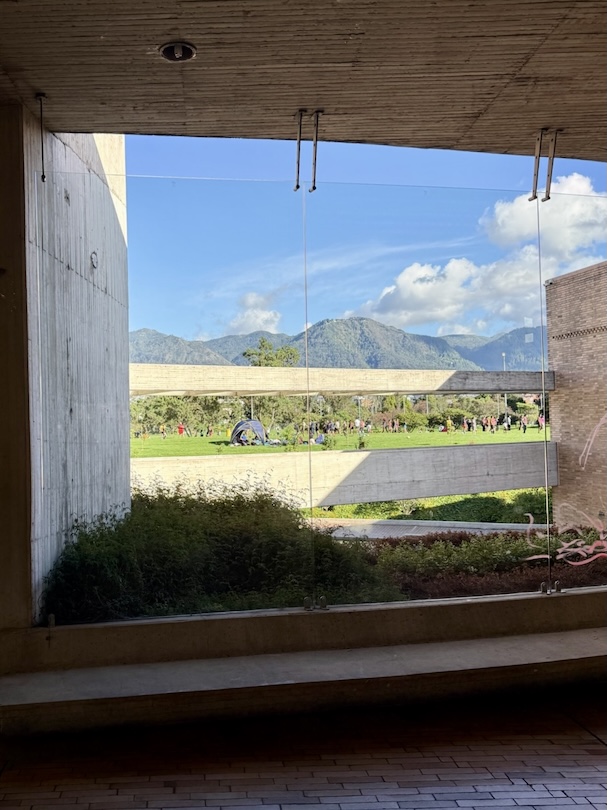
We continued on to the next park around the corner: Parque Virgilio Barco where the public library with the same name is located. Virgilio Barco was an ex-president of Colombia and also a former mayor of Bogotá. The public library was inaugurated in 2001. We walked inside and around the building and also on top where we enjoyed some beautiful panoramic views. The modern building itself is a true architectural gem and absolutely worth visiting.
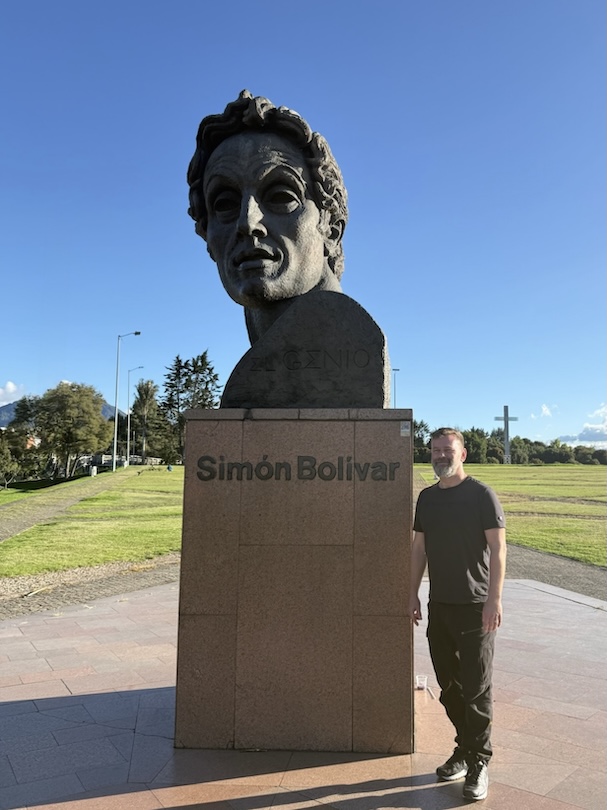
We got a bit tired (we had been clubbing the night before) but continued to Parque Simón Bolívar. Simón Bolívar was the liberator of Colombia, Venezuela and some other South American countries from Spanish colonialism. On all of our travels to Venezuela and Colombia we came across this important historic figure. So we have developed a certain obsession that led to the discovery of wonderful places, too:
- For example we have seen the tomb of Bolívar in Caracas in 2005.
- In 2007 we visited the famous Campo Carabobo in Venzuela where Bolívar beat the Spanish army in the decisive battle for independence.
- In January 2026 we visited his home in Bogotá and also the place where he died in Santa Marta.
Strolling a bit through the park we finally found a large sculpture of Simón Bolívar. Feeling accomplished we finally head back to our hotel and took a nap.
Discover more from Wild Paths Together
Subscribe to get the latest posts sent to your email.

Leuk om te lezen, heren!
LikeLike